After two decades in medical technology, I have watched robotic surgery evolve from a novelty into a standard of care. But the latest wave—AI-assisted surgery—is different. It is not just a better joystick. It is a fundamental shift in how we plan, execute, and verify procedures. If you are a surgeon or hospital administrator, here is what you need to know right now.
The core value of AI in the operating room is not autonomy. It is augmentation. Think of it as a second set of eyes that never gets tired, never loses focus, and can instantly compare your current view to thousands of prior cases. The key features you will encounter are real-time anatomical segmentation, instrument tracking, and predictive analytics. Real-time segmentation means the AI highlights critical structures like ureters, vessels, and nerves directly on your endoscopic feed. This is not a static overlay; it updates with every movement, reducing the cognitive load of constantly checking anatomy. Instrument tracking uses computer vision to monitor every tool tip, alerting you if a clamp drifts into a forbidden zone. Predictive analytics, still emerging, can forecast potential complications—like excessive bleeding or tissue ischemia—seconds before they become visible to the human eye.
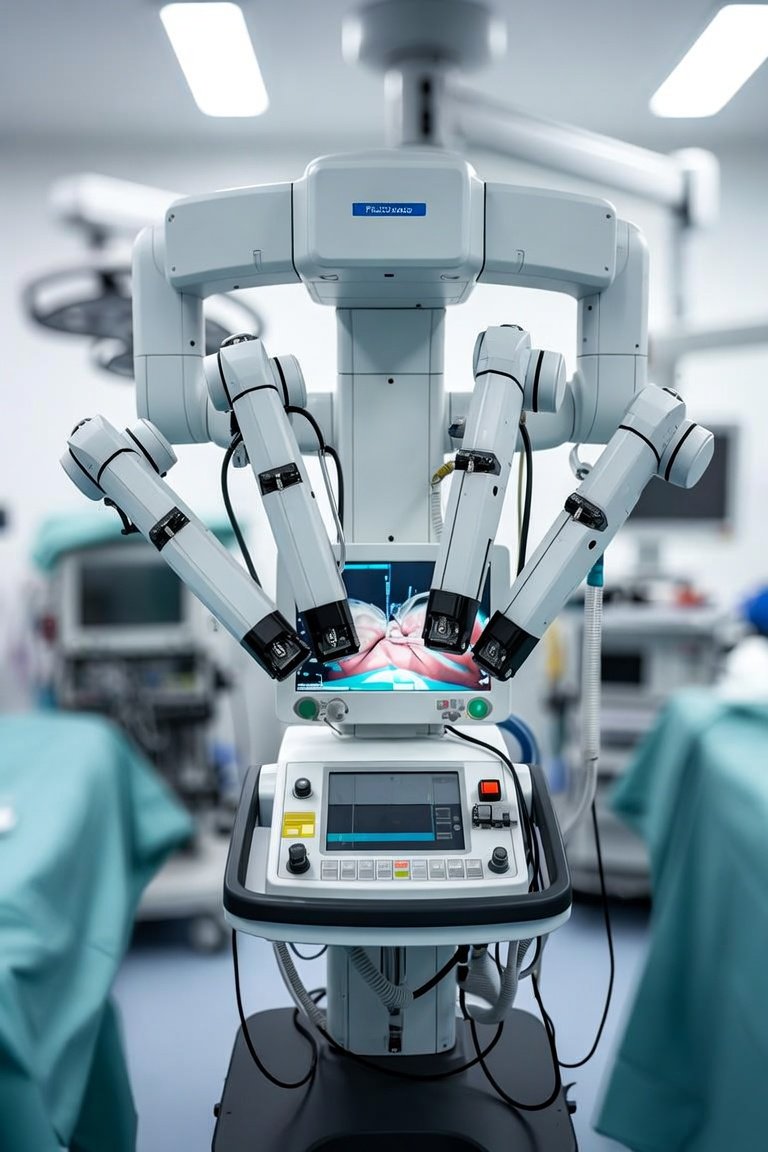
How does this compare to what you already use? The most common platforms today are the da Vinci Xi and the newer Hugo RAS system. The da Vinci Xi, with its integrated Firefly fluorescence and TilePro multi-input display, is a mature system. Adding AI-assisted software like the Touch Surgery Enterprise platform gives it real-time video analysis. Hugo RAS, from Medtronic, offers a modular design and a more open software architecture, which allows third-party AI algorithms to be integrated more easily. In my experience, the Hugo system is better suited for hospitals that want to customize their AI tools, while the da Vinci ecosystem is more plug-and-play. The cost difference is significant: a new da Vinci system runs around 2 million dollars, while Hugo is closer to 1.5 million. But the real expense is the per-procedure consumables, which can add 500 to 2,000 dollars per case. AI software subscriptions add another 50,000 to 200,000 dollars annually.
What should you look for when evaluating these systems? First, demand clinical validation. Not every AI algorithm is FDA-cleared for the specific procedure you perform. Check for 510(k) clearance and look for peer-reviewed studies showing reduced complication rates, not just shorter operative times. Second, assess the user interface. The AI must integrate seamlessly into your existing workflow. If it requires a separate monitor, a headset, or constant recalibration, it will slow you down. The best systems overlay data directly onto your primary surgical display. Third, consider data privacy. AI systems learn from video data. Ensure your hospital has a clear policy on how that data is stored, anonymized, and shared with the vendor. Finally, train your team. AI-assisted surgery requires a new skill set for the entire OR staff—nurses, anesthesia, and surgical techs all need to understand what the AI is showing and when to trust it.
My closing recommendation is this: start small. Do not try to implement AI across all specialties at once. Pick one high-volume, low-complexity procedure—like laparoscopic cholecystectomy or inguinal hernia repair—and pilot the AI system there. Measure your outcomes: operative time, conversion rates, and complication rates. If the AI proves its value, then expand to more complex cases like prostatectomy or colectomy. The technology is ready. The question is whether your team is ready to use it wisely.
Innovations & Tech
AI-Assisted Surgery: Separating Hype from Clinical Reality