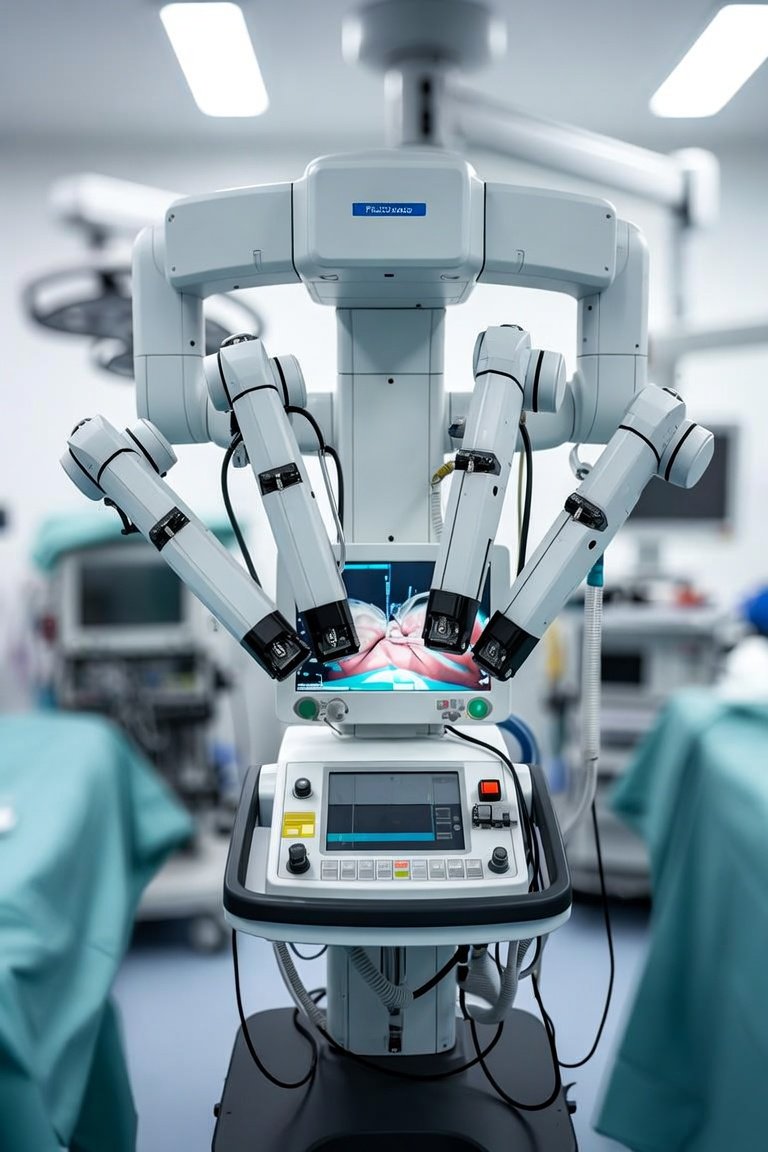
Over the past two decades, I have watched surgical technology evolve from basic laparoscopic tools to robotic systems that can filter tremor and magnify a surgeon's view tenfold. Today, the next frontier is artificial intelligence. But for the practicing surgeon, AI is not a magic wand. It is a set of practical tools that can enhance decision-making, reduce variability, and improve patient outcomes when used correctly.
The first thing doctors need to understand is what AI actually does in the operating room. It does not replace the surgeon. Instead, it acts as a real-time assistant that processes data faster than any human can. Three key features stand out. 1) Image recognition: AI can analyze live video feeds from endoscopes or cameras to highlight critical structures like blood vessels, nerves, or tumor margins. This is already used in colorectal and urologic procedures to reduce inadvertent injury. 2) Predictive analytics: By comparing current patient vitals and surgical progress against thousands of prior cases, AI can warn of impending complications, such as sudden blood loss or arrhythmia, before they become critical. 3) Workflow optimization: AI can track instrument usage, suture counts, and procedural steps, flagging deviations from standard protocols. This reduces cognitive load on the surgical team.
When comparing AI-assisted systems, the options vary by depth of integration. Some platforms, like the da Vinci Xi with Firefly fluorescence, offer basic AI overlay for tissue perfusion. Others, such as the Medtronic Hugo or the newer CMR Versius, incorporate machine learning modules that adapt to individual surgeon patterns. The most advanced systems, like those from Johnson & Johnson's Verb Surgical, combine AI with cloud-based analytics, allowing peer-to-peer benchmarking. The key difference lies in whether the AI is passive (displaying information) or active (suggesting next steps). For most surgeons, passive AI is sufficient and safer, as it augments judgment without overriding it.
What should you look for when evaluating an AI-assisted system for your OR? First, demand transparency. Ask the vendor: What data was the AI trained on? Was it from your specific patient population? Second, consider the learning curve. A system that requires weeks of retraining may not be practical for a busy department. Third, look for interoperability. The AI should work with your existing PACS, EMR, and robotic platforms without requiring a complete infrastructure overhaul. Fourth, verify regulatory clearance. In the U.S., FDA has cleared several AI modules for specific indications, such as polyp detection or critical structure identification, but not for autonomous decision-making. Always check the label.
My closing recommendation is straightforward: start small. Do not try to implement AI across all your cases at once. Pick one high-volume, low-complexity procedure, such as laparoscopic cholecystectomy, and use an AI module that highlights the cystic duct and artery. Run it for 20 cases, compare your operative times and complication rates against historical data, and then expand. AI-assisted surgery is not about replacing the surgeon's hands. It is about giving those hands better information. And in my experience, that is the truest innovation of all.
Innovations & Tech
AI-Assisted Surgery: Separating Hype from Clinical Reality