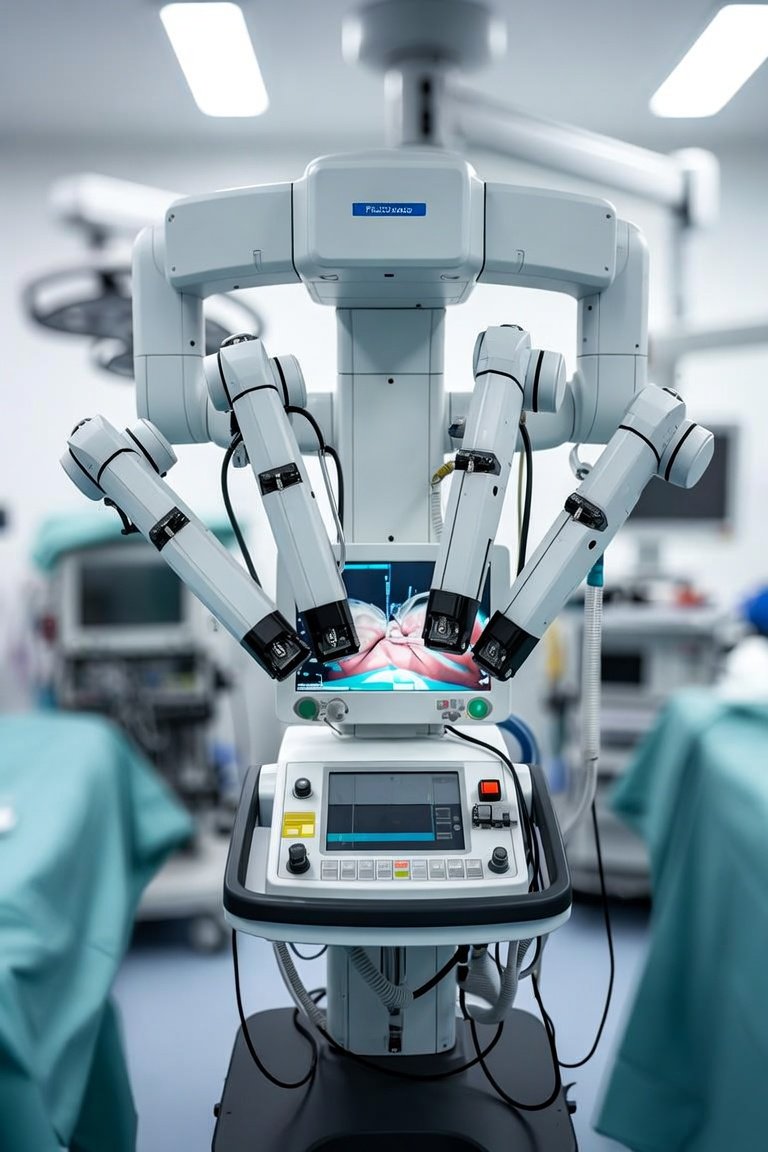
I have spent two decades evaluating and implementing surgical technology, and I can tell you that AI-assisted surgery is not science fiction. It is a rapidly maturing field that is already changing how we approach procedures, from pre-operative planning to intraoperative decision-making. For the practicing surgeon, the key is understanding what this technology actually does and, more importantly, what it does not do.
The core value of AI in surgery lies in its ability to process vast amounts of data in real time, augmenting the surgeon's natural skills. First, consider enhanced visualization. AI algorithms can label critical structures like blood vessels, nerves, and tumor margins directly on the endoscopic or robotic video feed. This is not a vague overlay; it is a dynamic, color-coded map that updates with every movement. Second, AI provides real-time decision support. During a laparoscopic cholecystectomy, for example, the system can analyze the tissue being dissected and flag regions with a high probability of containing the common bile duct, a structure you absolutely want to avoid. Third, AI enables predictive analytics. By analyzing the surgeon's instrument motion and the patient's physiological data, the system can predict a potential complication, such as a sudden drop in blood pressure or an inadvertent tissue tear, seconds before it occurs. This gives you a window to adjust your approach.
When comparing AI-assisted systems, you will find two primary categories: integrated platforms and modular add-ons. Integrated systems, like the latest da Vinci Xi with its Firefly fluorescence and TilePro multi-input display, have AI built into the console. They offer a seamless experience but come with a high capital cost and a fixed ecosystem. Modular add-ons, such as the Activ Surgical platform or the Touch Surgery Enterprise, are designed to work with existing laparoscopic towers or robotic systems. These are more flexible and often more affordable, but they require careful calibration and can introduce latency if not properly optimized. For a busy community hospital, a modular system might be the better choice to avoid a multi-million dollar investment. For a high-volume academic center, an integrated platform offers the most streamlined workflow.
What should you look for when evaluating an AI-assisted surgery system? Focus on three things. One, the training data. Ask the vendor: On how many cases was this algorithm trained? Was it trained on diverse patient populations, including different body habitus and pathologies? A model trained only on thin patients in a single center will fail you in the real world. Two, the latency. Any delay between the surgeon's action and the AI's response is unacceptable. The system must operate at 60 frames per second with less than 100 milliseconds of lag. Three, the user interface. The AI should not clutter your view. It should provide clear, intuitive alerts that do not require you to look away from the surgical field. A simple auditory tone or a subtle color change is far more useful than a pop-up window.
In my experience, the surgeons who adopt AI-assisted surgery most successfully are those who treat it as a co-pilot, not an autopilot. The technology is not making decisions for you. It is providing you with a second set of eyes that never gets tired, never gets distracted, and has instant recall of thousands of similar cases. Your judgment, your experience, and your hands remain the final authority.
My closing recommendation is this: do not wait for the technology to be perfect. It will never be perfect. Instead, start with a pilot program using a modular system on a specific, high-volume procedure like a laparoscopic cholecystectomy or a robotic prostatectomy. Track your outcomes, your operative time, and your complication rates. The data will speak for itself. AI-assisted surgery is not a replacement for your skill; it is an amplifier. And in the modern operating room, that amplification is becoming a necessity.
Innovations & Tech
AI-Assisted Surgery: Separating Signal from Noise in the Operating Room