In my two decades of working with medical technology, I have seen portable ECG monitors evolve from bulky, single-lead curiosities into sophisticated diagnostic tools that can rival traditional 12-lead systems in specific scenarios. Whether you are a cardiologist monitoring a post-MI patient, a GP screening for atrial fibrillation, or a concerned individual tracking palpitations, choosing the right device is critical. Today, I will compare the top contenders based on real-world performance, clinical validation, and practical usability.
The key features that separate professional-grade portable ECG monitors from consumer gadgets are lead configuration, recording duration, and data management. For clinical decision-making, you need more than a simple rhythm strip. The best devices offer at least a single-lead recording, but for detecting ischemia or complex arrhythmias, a six-lead or 12-lead system is superior. I recommend devices that store recordings locally and allow export to electronic health records. Look for FDA clearance or CE marking, not just general wellness claims. Battery life should exceed 30 days of standby with at least 100 single recordings per charge. Finally, consider the electrode quality: reusable gel pads are cost-effective but require cleaning, while disposable electrodes offer better adhesion for extended monitoring.
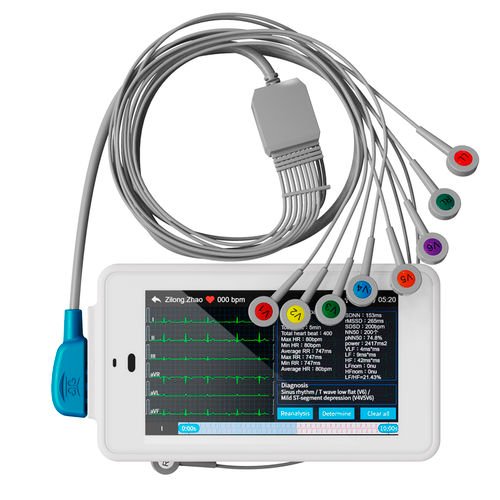
Let us examine three leading options. First, the KardiaMobile 6L by AliveCor records six leads using a simple thumb-and-leg placement. It is compact, fits in a pocket, and provides instant AI analysis for AFib, bradycardia, and tachycardia. In my practice, I find it reliable for detecting paroxysmal AFib, but the six-lead format misses posterior and right ventricular activity. Second, the Zio XT by iRhythm is a patch-based monitor that records continuously for up to 14 days. It is ideal for capturing elusive arrhythmias, but it requires a prescription and a return mailer for analysis. The data is comprehensive, but you wait days for results. Third, the Wellue 12-Lead ECG Monitor offers a full diagnostic 12-lead recording in a portable form factor. It uses a chest belt and wrist electrodes, which takes practice to apply correctly. The trade-off is accuracy: it matches hospital-grade 12-lead machines for ST-segment analysis, but it is bulkier and less discreet than the KardiaMobile.
What should you look for when selecting a portable ECG monitor? First, define your clinical goal. For routine screening or patient education, a single-lead device like the KardiaMobile 1L is sufficient. For diagnosing complex arrhythmias, choose a continuous monitor like the Zio XT. For ischemic heart disease follow-up, a 12-lead system like the Wellue is non-negotiable. Second, evaluate the software ecosystem. Does the device integrate with your EMR? Can patients share data securely? Third, consider the patient population. Elderly patients may struggle with small buttons or complex electrode placements. Finally, check the warranty and replacement policy. Most devices last two to three years with proper care.
My closing recommendation is straightforward: for most clinicians, the KardiaMobile 6L offers the best balance of portability, clinical utility, and cost. It is my go-to for telemedicine and outpatient monitoring. For specialist cardiology or research, invest in the Wellue 12-lead system. And for long-term monitoring, the Zio XT remains the gold standard. Whatever you choose, ensure your team is trained on proper electrode placement and data interpretation. A portable ECG monitor is only as good as the clinician who uses it.
Medical Devices
Best Portable ECG Monitors: A Practical Comparison for Clinicians and Patients