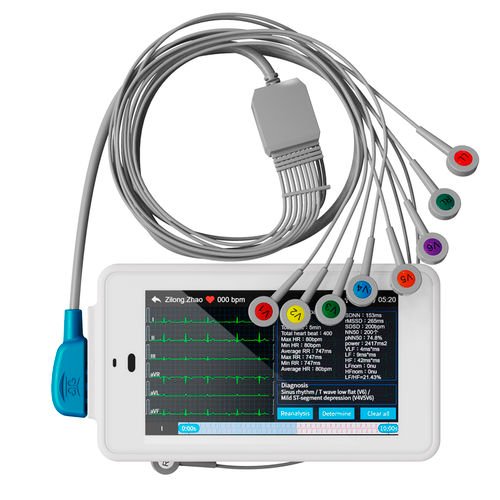
After two decades in medical technology, I have seen portable ECG monitors evolve from niche devices into essential tools for remote cardiac monitoring. Whether you are managing atrial fibrillation, screening for arrhythmias, or simply tracking heart health between visits, choosing the right device matters. Here is my hands-on comparison of the top options available today, based on real-world use and technical performance.
The key features to consider are accuracy, ease of use, data storage, and connectivity. Most modern devices use a single-lead or modified limb lead configuration, which is sufficient for detecting common arrhythmias like AFib, bradycardia, and tachycardia. However, not all leads are equal. For example, the KardiaMobile 6L uses six leads, providing more diagnostic detail than single-lead alternatives. This matters when you need to differentiate between conditions like atrial flutter and sinus arrhythmia. Another critical factor is the device's ability to store recordings locally and sync with a smartphone app. Some monitors, like the Wellue ECG Monitor, store up to 30 recordings on board, while others rely entirely on cloud storage. If you work in a setting with limited internet access, local storage is a must.
Now, let us compare the top three devices. Number one is the AliveCor KardiaMobile 6L. It is my go-to recommendation for clinicians because it captures a six-lead ECG in 30 seconds. The algorithm detects AFib and normal sinus rhythm with 98% accuracy in clinical studies. It pairs with iOS and Android via Bluetooth, and the app allows you to share PDFs directly with a physician. The downside is the cost, around $150, and it requires a smartphone. Number two is the Wellue ECG Monitor (also sold as the ViHealth device). It offers continuous monitoring for up to 24 hours, which is ideal for capturing intermittent symptoms. It uses a single-lead but includes a chest strap for hands-free use. The software highlights irregular beats automatically, saving you time during review. It costs about $100 and works well for patients who need longer recording windows. Number three is the Omron Complete. This is a unique hybrid that combines a blood pressure cuff with a single-lead ECG. It is excellent for patients with hypertension and suspected arrhythmias, as you can measure both parameters simultaneously. The trade-off is the size and price, around $200, but the dual function justifies the cost for specific populations.
What should you look for when choosing a portable ECG monitor? First, confirm that the device is FDA-cleared or CE-marked for your region. Avoid generic products that lack regulatory approval, as their algorithms are often unreliable. Second, consider the patient's technical comfort. Older adults may struggle with small touchscreens, so devices with large buttons or voice guidance, like the KardiaMobile, are better. Third, evaluate the battery life. Most devices last for hundreds of recordings on a single coin cell, but rechargeable models like the Wellue require charging every 24 hours. Finally, check the data export options. You need a device that generates a standard PDF or DICOM file that can be attached to an electronic health record. Proprietary formats are a headache.
My closing recommendation is straightforward. For most clinicians and patients, the KardiaMobile 6L offers the best balance of accuracy, portability, and clinical utility. If continuous monitoring is needed, the Wellue ECG Monitor is a strong second choice. And for hypertensive patients, the Omron Complete is a smart investment. Always pair the device with a clear protocol for when to seek emergency care, and remember that these tools are adjuncts, not replacements for a full 12-lead ECG. Choose wisely, and your patients will thank you.
Medical Devices
Best Portable ECG Monitors Compared: A Practical Guide for Clinicians and Patients