Opening a new practice is a defining moment. You have the location, the staff, and the vision. But the real test begins when the first patient walks through the door, and your equipment either instills confidence or creates friction. After two decades in medical technology, I have seen practices thrive on lean budgets and struggle with bloated ones. The difference is not how much you spend, but what you choose to buy. Here are the ten essential tools that form the backbone of any successful new medical practice, ranked by their daily impact on patient care and workflow.
1. THE EXAM TABLE. This is your workhorse. Do not buy the cheapest model. Look for a table with electric height adjustment, not just hydraulic, because you will adjust it dozens of times a day. A backrest that rises independently and a Trendelenburg feature for emergencies are non-negotiable. Consider the upholstery: seamless, antimicrobial vinyl is worth the extra cost because it prevents fluid ingress and is easy to wipe down between patients. Weight capacity matters, so check for a minimum of 400 pounds to accommodate all body types.
2. THE VITAL SIGNS MONITOR. You need one device that does it all: blood pressure, pulse oximetry, temperature, and pulse rate. A portable, rechargeable unit with a built-in printer is ideal. Do not buy a separate BP cuff and thermometer; that is outdated thinking. Modern multi-parameter monitors take up less counter space and give you a single record for the chart. Look for one with an adult and pediatric cuff option. The most reliable brands are Welch Allyn and Hillrom, but newer entrants like Riester offer excellent value without sacrificing accuracy.
3. THE OTOSCOPE AND OPHTHALMOSCOPE SET. This is your diagnostic window. Invest in a fiber-optic set with a halogen or LED light source. The difference between a dim, yellow light and a bright, white one is the difference between seeing a retracted eardrum or missing it. Buy a wall-mounted unit if you can, because a handheld set will walk away. The 3.5V Welch Allyn sets are the gold standard, but a good alternative is the Riester brand, which offers comparable optics at a lower price point.
4. THE CENTRIFUGE. If you plan to do any in-house testing, you need a reliable centrifuge. Do not buy a fixed-speed model. You need a variable-speed unit with a timer, capable of spinning at 3,500 RPM for spun hematocrits and 1,500 RPM for urine sediment. Look for a model with a sealed rotor head to prevent aerosolization of infectious samples. A small, bench-top model from Thermo Fisher or Drucker is a solid investment.
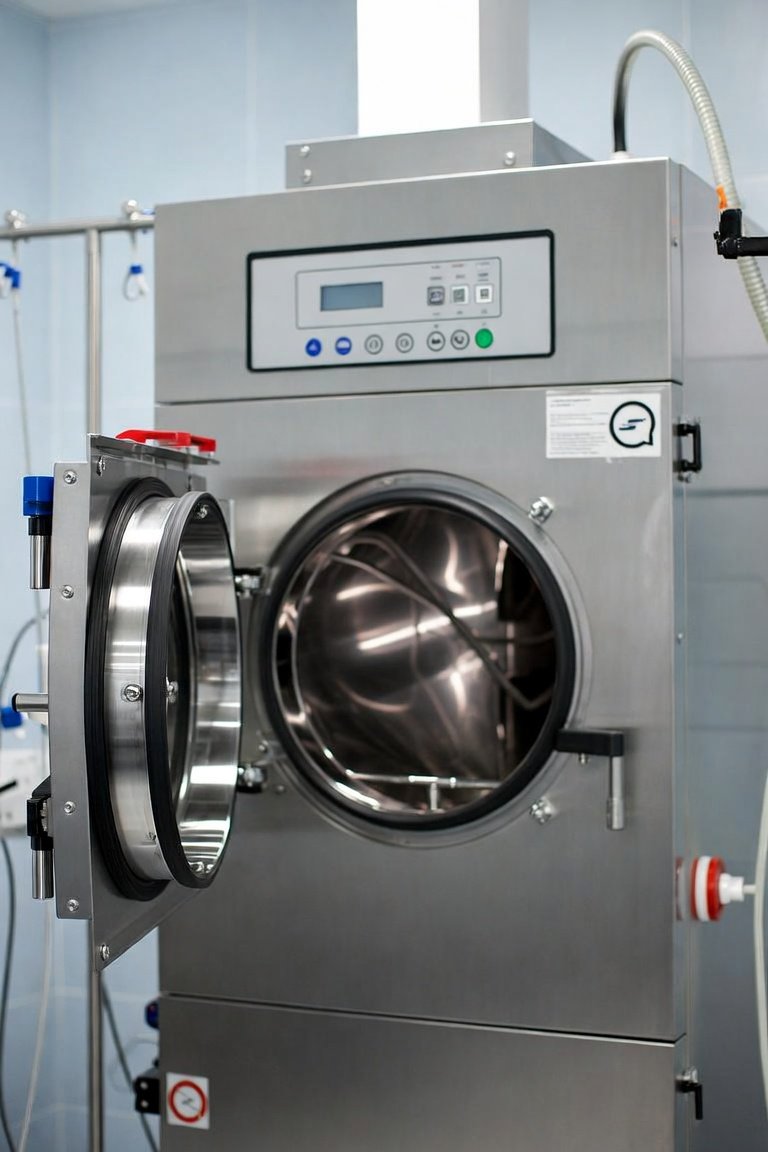
5. THE AUTOCLAVE. Sterilization is not optional. A class B autoclave is the only type that can sterilize pouched instruments effectively because it uses a vacuum cycle to remove air. A class N (gravity displacement) unit is cheaper but only works for unwrapped instruments. If you are doing minor procedures, get a class B. Look for a chamber size of at least 12 liters to handle your daily instrument load without running multiple cycles. Brands like Tuttnauer and Melag are reliable, but the Chinese-made models from Runyes are surprisingly robust for a new practice budget.
6. THE EKG MACHINE. You will need a 12-lead EKG for every new patient over 40. Do not buy a three-channel machine that prints on thermal paper only. Get a digital, interpretive model that can store results electronically and integrate with your EHR. A touchscreen interface with a built-in interpretation algorithm is essential. The GE MAC 2000 is the industry standard, but the Midmark IQvitals is a more affordable option that produces excellent tracings.
7. THE MINOR SURGERY TRAY. For suturing, biopsies, and I&Ds, you need a dedicated set. Do not use a general-purpose kit. Get a stainless steel tray with a needle holder, tissue forceps, scissors, and a scalpel handle. The key is the quality of the steel. German-made instruments from brands like Sklar or Miltex hold their edges far longer than cheaper imports. You will also need a small cautery unit for hemostasis; a battery-operated portable one is sufficient for most clinic procedures.
8. THE REFRIGERATOR. This is not a domestic fridge. You need a purpose-built medical refrigerator with a temperature alarm and a digital display. It must maintain a consistent temperature between 2 and 8 degrees Celsius. A standard kitchen fridge has wide temperature fluctuations that can ruin vaccines and reagents. Look for a compact model with a glass door so you can see inventory without opening it. The brands to trust are Helmer and Thermo Scientific, but a good commercial pharmacy fridge from True is a reliable alternative.
9. THE SCALE AND HEIGHT ROD. This seems trivial, but it is the most used piece of equipment in any practice. Buy a digital scale with a built-in height rod, not a mechanical beam scale. Digital scales are more accurate, easier to read, and can calculate BMI automatically. Look for a capacity of 500 pounds and a low-profile platform for easy access for elderly patients. Detecto makes the most durable models in this category.
10. THE COMPUTER AND EHR SYSTEM. This is not a luxury; it is a medical device. You need a dedicated practice management system with a secure server, not a consumer laptop. The hardware must have a solid-state drive for fast boot times and a barcode scanner for medication administration. The software should have e-prescribing, lab integration, and a patient portal. Do not skimp here. The best equipment in the world is useless if you cannot document and bill for it. Look for a cloud-based system like Epic or Athenahealth, or a more budget-friendly option like Kareo or Practice Fusion.
What to look for across all these tools is serviceability. A machine is only as good as the technician who can repair it. Before you buy, check that the manufacturer has a local distributor with a service contract. Ask about turnaround time for parts. A broken centrifuge for two weeks is a disaster; a broken autoclave for two days is a crisis.
In closing, my advice is to prioritize durability over features. A new practice does not need the most advanced, expensive model on the market. It needs reliable, repairable, and accurate equipment that will not fail you in the first two years. Buy the best you can afford in the exam table, the vital signs monitor, and the autoclave. These are the tools that your patients see and that your staff relies on every single day. The rest can be upgraded as your practice grows. Start with these ten, and you will have a solid foundation for a thriving, efficient, and professional clinic.
Clinic Equipment
Equipping Your First Clinic: The 10 Tools That Matter Most