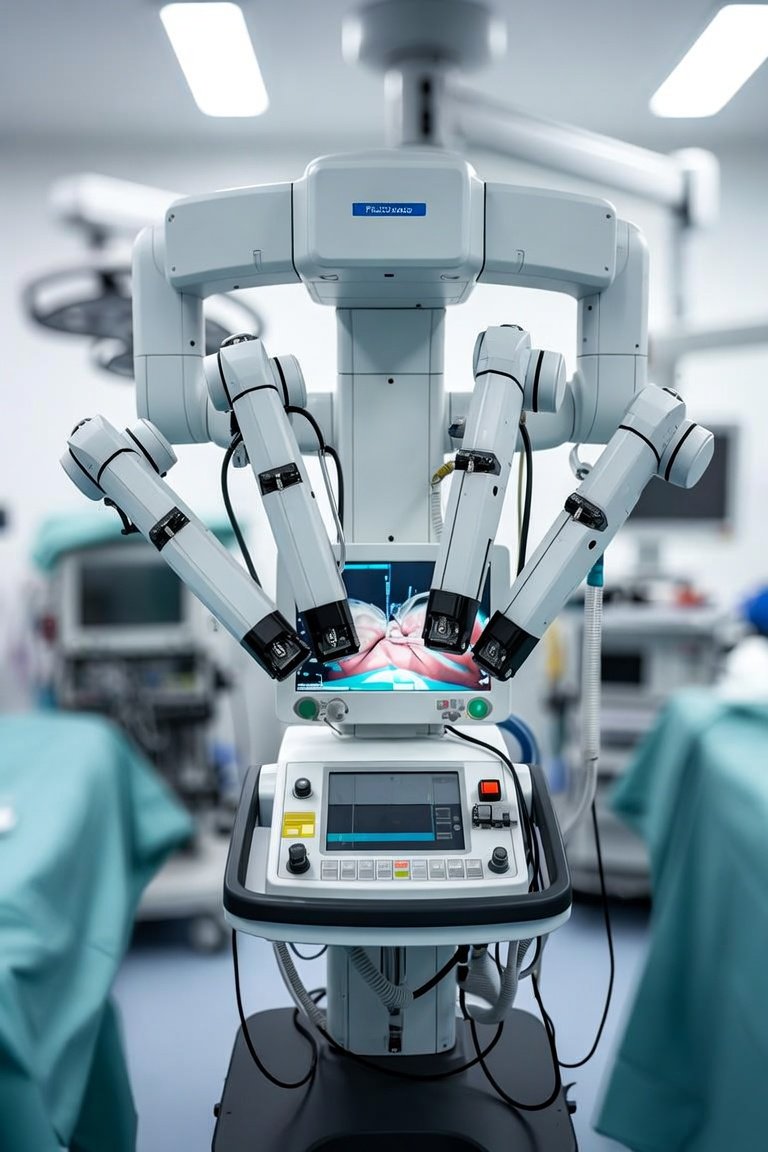
For decades, the phrase "robotic surgery" conjured images of a machine operating autonomously. The reality, as most of you know, is far more nuanced. The da Vinci system, for all its brilliance, is a master-slave device; it extends the surgeon’s hands but not their mind. The true revolution we are witnessing now is not in the robotic arms, but in the silicon between them. AI-assisted surgery is no longer a futuristic concept from a trade show booth. It is quietly integrating into ORs across the country, and understanding its practical applications is no longer optional—it is becoming a matter of standard of care.
Let us strip away the hype and focus on what the technology actually does today. The most immediate and impactful feature is intraoperative decision support. This is not a robot telling you how to cut. It is a system that analyzes live video feeds and pre-operative imaging to highlight critical anatomy. For example, in colorectal surgery, AI can overlay a color map on the tissue to differentiate the ureter from surrounding vasculature in real time. This is not a vague suggestion; it is a pixel-level annotation that reduces the cognitive load of identifying structures under heavy bleeding or inflammation. The system learns from thousands of prior cases, recognizing patterns of tissue texture and movement that the human eye might miss.
Second, we have the advent of "smart" tissue perfusion assessment. In anastomosis, the surgeon’s greatest fear is a leak due to poor blood flow. Traditional methods rely on indocyanine green dye and subjective interpretation. New AI algorithms quantify this fluorescence signal, providing a numerical perfusion score. If the score falls below a validated threshold, the system flags the risk of anastomotic failure before you close. This is actionable, objective data that directly influences intraoperative decisions, potentially reducing the incidence of a devastating complication.
Third, consider the integration of AI in arthroplasty. Robotic systems like Mako and ROSA have used haptic boundaries for years. The new layer of intelligence is predictive ligament balancing. The system doesn't just cut bone; it uses a dynamic tensioning device to measure the joint gap through a full range of motion, then predicts the final soft tissue balance post-implant. This allows for a more personalized alignment—kinematic versus mechanical—based on data, not just the surgeon's "feel."
Now, how do you choose which system to adopt? This is where you must be a discerning buyer. There are two distinct categories on the market. The first is the "closed-loop" systems like the ones mentioned above, which are procedure-specific. They require dedicated instruments and a significant capital investment. The second, and arguably more disruptive, category is the "agnostic" software layer. These are AI platforms that run on any standard laparoscopic or robotic camera system. They do not require you to change your instruments. They simply plug into the video feed and provide the anatomical overlays and perfusion data. For a hospital with a mixed fleet of equipment, this is often the most cost-effective entry point. It allows you to upgrade your existing ORs without a multi-million dollar robot purchase.
What should you look for when evaluating these tools? First, demand to see the training data. Ask for the specific case volumes and patient demographics used to validate the algorithm. A model trained primarily on a Western population may not perform as well in a different demographic. Second, scrutinize the user interface. The best AI is invisible. If the system requires you to look away from the surgical field or navigate complex menus, it will be abandoned. Look for systems that display information on the existing monitor with minimal clutter. Third, verify the integration with your EMR. The AI should be able to capture the relevant data points (e.g., perfusion score, alignment angles) and automatically populate the operative note, saving you time and reducing transcription errors.
Finally, do not overlook the medicolegal aspect. AI is a tool, not a colleague. The final decision always rests with you. Ensure your hospital’s liability policy covers the use of these decision-support systems. Document your reliance on the data, but also document your clinical judgment when you deviate from the AI’s suggestion.
In my two decades in this field, I have seen technologies come and go. AI is not a passing trend. It is a fundamental shift in how we process intraoperative information. Start small. Pilot one system on one procedure type. Measure your outcomes against your historical data. Let the technology prove its worth in your hands, with your patients. The future of surgery is not autonomous robots; it is an augmented surgeon. The tools are ready. The question is, are you ready to use them?
Innovations & Tech
The Quiet Revolution in the Operating Room: A Practical Guide to AI-Assisted Surgery