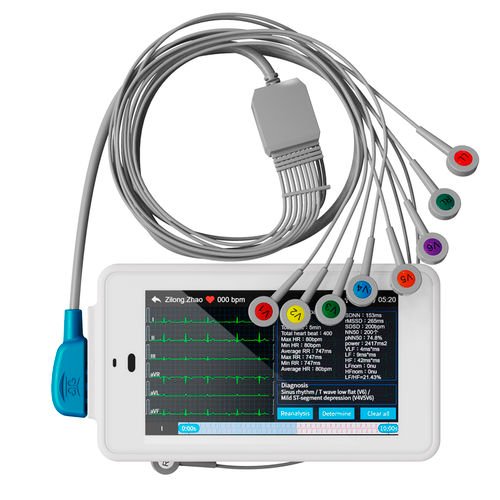
When you run a small clinic, every piece of equipment has to earn its keep. Patient monitors are no exception. You need reliability, accuracy, and a price point that doesn't blow your annual budget. After two decades in the field, I've seen monitors that shine in busy clinics and others that gather dust. Here are the top 10 models that deliver real value for small practices, along with what to look for when you buy.
1. Mindray uMEC12: A workhorse for general monitoring. It offers a 12.1-inch touchscreen, standard parameters like ECG, NIBP, SpO2, and temperature, plus optional Masimo SET for motion-tolerant SpO2. It's compact and easy to clean, ideal for exam rooms.
2. Philips SureSigns VS2+: Built for speed. It gives you a one-button vitals check in under 60 seconds. The non-volatile memory stores up to 100 patient records. Perfect for quick triage in urgent care.
3. GE Healthcare Dash 2500: Rugged and intuitive. It has a 10.4-inch display, built-in recorder, and supports up to 4 invasive pressures. The battery lasts 4 hours, so it handles power dips well.
4. Welch Allyn Connex Spot Monitor: Wireless and versatile. It pairs with EMR systems via Bluetooth or Wi-Fi. The Spot Check mode is fast, and the optional Nellcor SpO2 is highly accurate for low-perfusion patients.
5. Nihon Kohden LifeScope VS: Designed for simplicity. It uses a single touchscreen interface and a smart cable system that reduces clutter. The predictive alarm system cuts false alarms by up to 50 percent.
6. Masimo Root with Radical-7: A modular platform. You can add capnography, brain function monitoring, or noninvasive hemoglobin. The rainbow SET technology gives you continuous hemoglobin and oxygen content data.
7. Spacelabs Blease 9000: A compact unit with a 15-inch screen and a sealed front panel for easy disinfection. It supports up to 8 parameters and has a built-in rechargeable battery for transport.
8. Fukuda Denshi Dynascope DS-7100: Known for its waveform quality. The ECG analysis is robust, and the touchscreen is responsive even with gloves. It includes a 12-lead ECG option for cardiac clinics.
9. Schiller CARDIOVIT MS-2016: A hybrid monitor and ECG machine. It does full 12-lead interpretation, stress testing, and basic vital signs. The LCD is bright and readable in direct sunlight.
10. Bionet BM7: A budget-friendly option without sacrificing core features. It has a 12.1-inch screen, standard parameters, and a built-in recorder. The battery lasts 6 hours, and the user interface is straightforward.
When comparing these monitors, focus on three things: parameter needs, workflow integration, and total cost of ownership. For a primary care clinic, a basic model like the Mindray uMEC12 or Welch Allyn Connex is sufficient. For a cardiology or urgent care setting, the Schiller MS-2016 or Masimo Root offers more diagnostic depth. Always verify that the monitor supports your existing EMR system. Many modern monitors offer HL7 or FHIR connectivity, which saves time on manual data entry.
A common mistake is buying a monitor with too many features. Small clinics rarely use invasive pressures or cardiac output. Stick to the essentials: noninvasive blood pressure, SpO2, ECG, and temperature. If you see a lot of pediatric patients, look for a model with a neonatal mode and smaller cuffs. For geriatric patients, a larger screen and simple navigation are critical.
Finally, consider service and support. Mindray, Philips, and GE have strong service networks in most regions. Bionet and Fukuda Denshi are reliable but may have slower parts availability. I recommend buying from a local distributor who offers on-site training and a 2-year warranty minimum. A monitor is a long-term investment, and proper maintenance keeps it accurate for 5 to 7 years.
In my experience, the best monitor for your clinic is the one your staff actually uses. A monitor that sits in a corner because it's too complicated is a waste of money. Test a unit for a week before you commit. Let your nurses and medical assistants try it out. If they like it, you've found your winner.
Medical Devices
Top 10 Patient Monitors for Small Clinics: A Practical Guide