I have spent the last two decades watching patient monitoring evolve from hardwired carts to sleek, wearable patches. Wireless vital sign monitors now promise to untether patients from the bedside, but the reality is more nuanced than the marketing suggests. Let me walk you through what these devices actually deliver and where they still fall short in a busy clinical environment.
The primary advantage is patient mobility. A wireless monitor allows a post-surgical patient to walk the hallway, reducing deconditioning and improving recovery times. In step-down units, this freedom can cut length of stay by a full day. Second, these systems reduce alarm fatigue. Traditional hardwired monitors generate countless false alarms from motion artifact. Newer wireless patches use advanced algorithms to filter out movement, so nurses respond to real events. Third, installation is dramatically simpler. No more threading cables through headwalls or tripping over leads. A single access point can cover a ward, and the system self-configures.
However, there are tradeoffs you must consider. 1) Battery life remains the Achilles heel. Most continuous monitors last 48 to 72 hours. If a patient deteriorates and needs monitoring beyond that, you face a device swap or a recharge, which breaks data continuity. 2) Wireless interference is real. In a hospital with thick concrete walls, multiple Wi-Fi networks, and medical telemetry, signal dropout happens. I have seen monitors lose connection during a code blue because a staff member walked between the patient and the access point. 3) Data latency can be a problem. Some systems buffer data for 10 to 15 seconds before transmitting, which is unacceptable for detecting sudden arrhythmias or respiratory arrest.
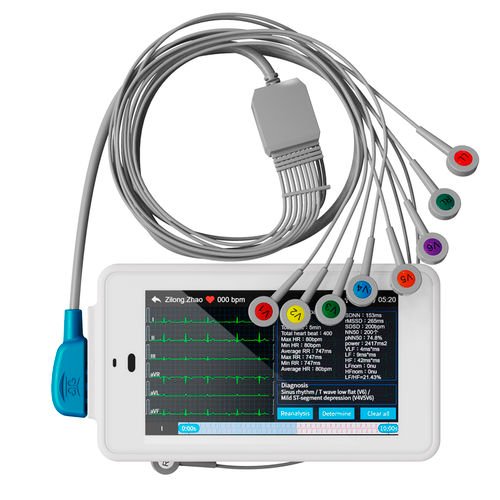
When comparing options, you have two main categories: chest-worn patches and wrist-based devices. Chest patches (like the VitalPatch or BioSticker) give you single-lead ECG, respiratory rate, and temperature. They are ideal for telemetry floors and general wards. Wrist devices (like the Masimo Radius or Samsung BioActive) add SpO2 and activity tracking but often sacrifice ECG accuracy because of motion. For ICU step-down, I recommend a chest patch with a separate pulse oximeter finger sensor. For general floor patients who just need spot checks, a wrist device is sufficient.
What you should look for in a wireless system: First, ensure the monitor uses a dedicated medical band, not consumer Wi-Fi. The 2.4 GHz ISM band is crowded with infusion pumps and phones, so a 5 GHz or sub-GHz medical band is more reliable. Second, verify the alarm latency specification. Ask the vendor for a documented transmission delay under 5 seconds for critical alarms. Third, check the adhesive. I have seen patches fall off during a sweat or a shower. Look for a medical-grade silicone adhesive rated for at least 72 hours. Finally, consider the central station integration. The monitor must feed data into your existing electronic health record or nurse call system without a custom interface.
In closing, wireless vital sign monitors are not replacements for hardwired monitors in high-acuity settings. They are excellent tools for early mobility, reducing alarm fatigue, and simplifying deployment in med-surg units. My recommendation: pilot a chest patch system on one telemetry floor for three months. Measure alarm counts, fall rates, and nursing satisfaction. Only then scale to other units. The technology is good, but the implementation is everything.
Medical Devices
Wireless Vital Sign Monitors: Balancing Freedom With Clinical Certainty