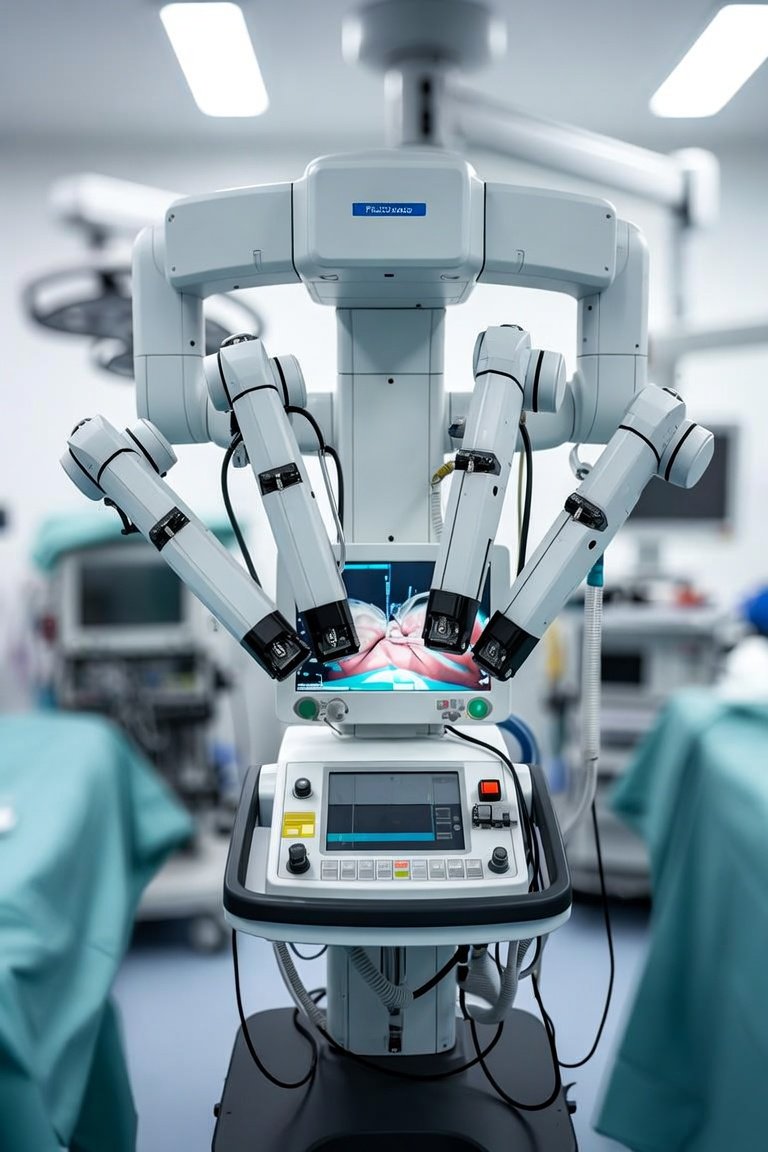
After two decades in medical technology, I have watched surgical robotics evolve from bulky experimental systems into precise, data-driven partners. Today, AI-assisted surgery is no longer a futuristic concept. It is a clinical reality that is reshaping operating rooms worldwide. As a specialist, I want to share what I have learned about these systems so you can make informed decisions for your practice.
The core of AI-assisted surgery lies in three key features: real-time image analysis, predictive modeling, and automated instrument control. First, AI algorithms process intraoperative data from cameras, ultrasound, or MRI to highlight critical structures like blood vessels or tumor margins. This reduces cognitive load and helps avoid inadvertent damage. Second, predictive models use historical case data to anticipate complications, such as sudden blood loss or arrhythmia, giving the surgical team a 30-second to two-minute warning. Third, some platforms offer semi-autonomous functions, like suturing or tissue retraction, where the AI guides the robotic arm while the surgeon supervises. These features are not about replacing you. They are about augmenting your skills.
When comparing options, you will encounter two main categories: integrated robotic systems and AI-enhanced laparoscopic tools. The most established platforms, like the da Vinci Xi with its Firefly fluorescence imaging, now incorporate AI modules for tissue recognition. Newer entrants, such as the Medtronic Hugo or the CMR Versius, offer modular arms and cloud-based AI analytics. For non-robotic setups, companies like Stryker and Olympus have AI overlays for standard laparoscopes that flag abnormal tissue in real time. My advice: do not chase the flashiest system. Instead, evaluate how well the AI integrates with your existing OR workflow. A system that requires a steep learning curve or frequent recalibration will slow you down, not speed you up.
What should you look for in a practical sense? First, demand transparency in the AI's training data. Ask the vendor: what patient demographics, case types, and anatomical variations were used to train the model? A system trained primarily on bariatric cases may perform poorly in vascular surgery. Second, insist on a dry-run simulation with your own team. Test how the AI handles unexpected events, like a sudden bleed or camera fog. Third, verify regulatory clearance. In the US, look for FDA 510(k) clearance specific to your intended use. In Europe, CE marking under the new MDR is essential. Do not accept vague claims of "AI-powered" without documented clinical outcomes.
Finally, remember that AI-assisted surgery is a tool, not a crutch. The best outcomes come from combining your clinical judgment with the machine's data processing. I have seen surgeons who rely too heavily on the AI lose situational awareness, while those who use it as a second opinion achieve lower complication rates. Start with simple cases, gradually increase complexity, and always maintain manual override capability.
In my experience, the most successful adopters are those who treat the AI as a junior partner: it suggests, you decide. Invest in training for your entire OR team, not just the primary surgeon. And stay current with software updates, as these systems improve rapidly. AI-assisted surgery is here to stay. Embrace it wisely, and it will make you a better surgeon.
Innovaciones y Tecnología
AI-Assisted Surgery: What Doctors Need to Know