Starting a dental practice is an exciting venture, but the sheer volume of equipment decisions can be overwhelming. Having spent two decades in medical technology, I have seen countless practices succeed or struggle based on their initial equipment choices. The goal is not to buy the most expensive items, but to build a workflow that is efficient, reliable, and safe for both your team and your patients. Your operatory is your command center, and every piece of equipment must justify its footprint and its cost.
The absolute foundation of your clinical setup is the delivery system and chair. You have three primary configurations: the traditional floor-mounted unit, the over-the-patient (or top-mount) delivery, and the rear-mounted system. For a general practice, I highly recommend the over-the-patient delivery system for its ergonomic benefits; it keeps the instrument tray closer to the treatment zone, reducing shoulder strain for the clinician. When comparing chairs, do not just look at the upholstery color. Inspect the articulation range, the weight capacity, and the quality of the hydraulic system. A chair that wobbles at full extension will ruin your precision and your patient’s confidence. Pair this with a quality LED operatory light; look for a color temperature around 5000 Kelvin and a high CRI to ensure you are seeing true tissue color, not a washed-out approximation.
Next, you must address your diagnostic and hygiene armamentarium. The intraoral camera is no longer a luxury; it is a communication tool. Patients trust what they can see. Choose a camera with a wireless docking station to avoid cable clutter and ensure a fast autofocus. For scaling and polishing, you will need a piezoelectric ultrasonic scaler. Do not buy a cheap unit that vibrates excessively; the handpiece should feel balanced and the water flow should be adjustable to avoid aerosol overspray. For the handpieces themselves, invest in a reliable high-speed (400,000 RPM) and a low-speed (20,000 RPM) system. Look for models with a push-button chuck for quick bur changes and a swivel mechanism to prevent hose torque. This is where you should not skimp, as these units endure the most wear and tear.
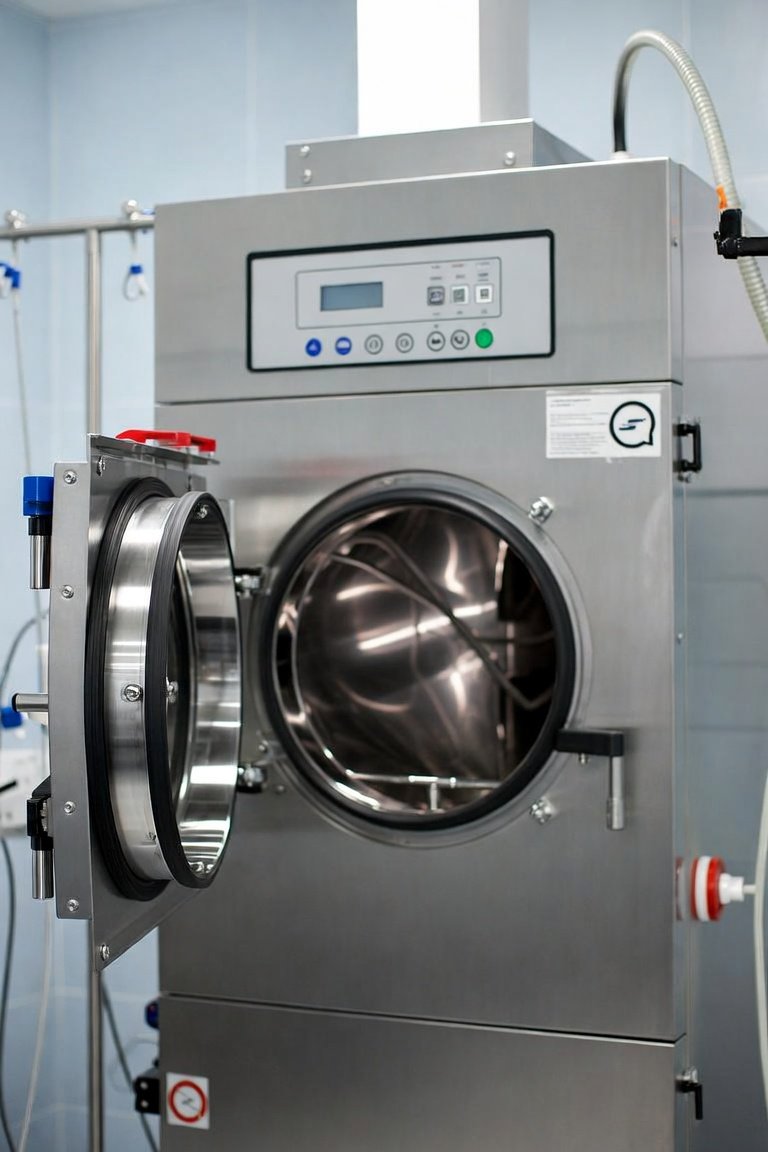
Your sterilization center is the heart of your safety protocol. You need a Class B autoclave, which is the only type that effectively sterilizes wrapped instruments and pouches with a vacuum cycle. Compare the chamber size to your daily patient volume; a 22-liter chamber is a good starting point for a single operatory. Do not forget the supporting cast: a pouch sealer, an ultrasonic cleaner for debris removal before sterilization, and a distilled water system to prevent mineral buildup in the boiler. Your suction system is equally critical. A dry vacuum system is quieter and more hygienic than a wet system, but it requires a separator and a proper amalgam trap. Ensure the central vacuum unit has enough horsepower (around 1.5 HP) to provide adequate suction at the high-volume evacuator tip.
Finally, consider the digital essentials. A digital radiography sensor is a must. Compare the sensor size; a size 2 sensor is standard for posterior periapicals, but a size 1 is more comfortable for anterior views. Look for a sensor with a durable, scratch-resistant surface and a fast image acquisition time. Pair this with a phosphor plate scanner if you prefer a wireless option, though the sensor is faster for high-volume work. For your operatory computer, ensure it has a solid-state drive and a high-resolution monitor, as image clarity is paramount. You will also need a curing light with a radiometer; a cordless LED light with a high-intensity output (greater than 1000 mW/cm²) is standard, but always verify the output regularly.
In summary, prioritize the items that touch the patient and the items that ensure sterility. Start with a solid chair, reliable handpieces, and a Class B autoclave. You can always add cosmetic upgrades later, but you cannot compromise on the mechanical integrity of your core systems. Purchase from a reputable distributor that offers local service and training, not just the lowest price. A breakdown on day three will cost you more than the premium you saved. Build your practice on reliability, and your clinical reputation will follow.
Equipamiento Clínico
Equipping a New Dental Practice: The Essential Checklist for Clinical Success