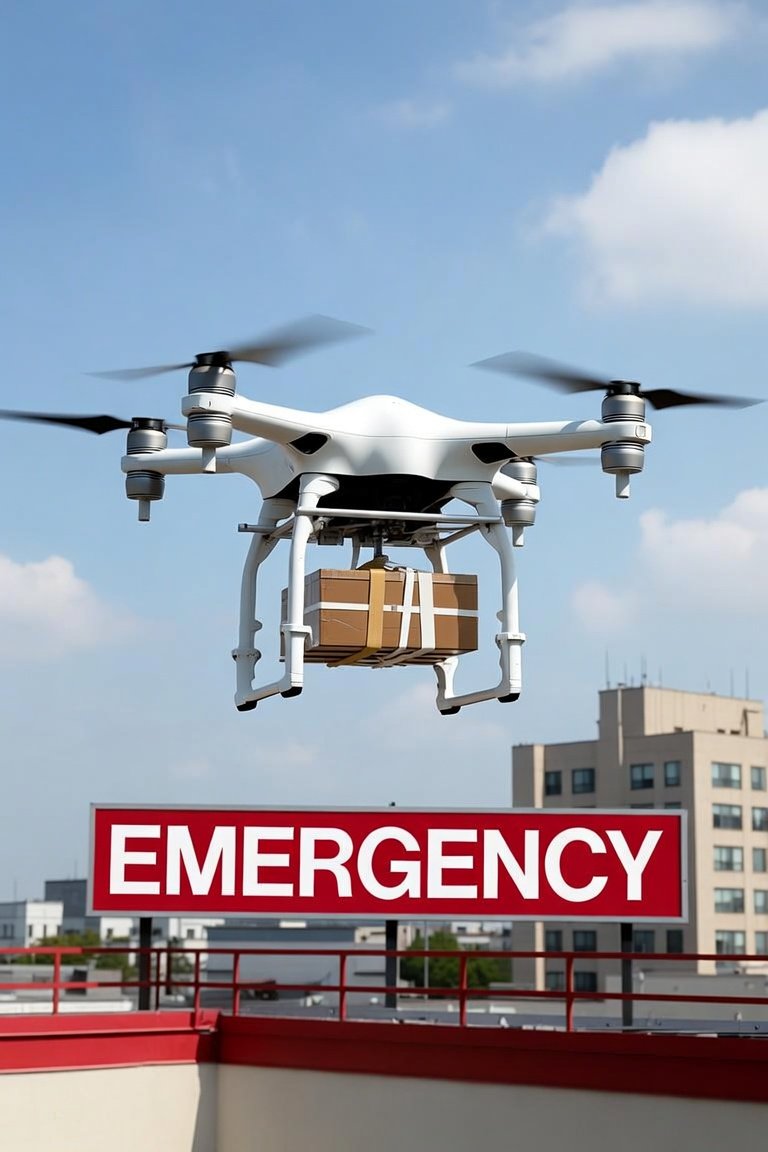
Over the past two decades, I have watched medical technology evolve from bulky defibrillators to handheld ultrasound devices. But nothing has shifted the landscape of prehospital care quite like the integration of drones into emergency response systems. These are not toys or hobbyist gadgets. They are purpose-built aerial platforms designed to deliver life-saving equipment to patients in the golden window of opportunity, often before a ground ambulance can arrive. I have personally overseen pilot programs where drones delivered automated external defibrillators to cardiac arrest scenes, and the data is compelling: response times dropped from an average of eight minutes to under three.
What makes these systems truly practical is their payload versatility. A well-configured medical drone can carry three distinct categories of gear. First, there are critical intervention devices like AEDs and tourniquet kits, which require no medical training to deploy. Second, advanced airway kits and naloxone auto-injectors for opioid overdoses, designed for first responders on scene. Third, and most impressive, are compact blood product coolers for hemorrhage control in rural or disaster zones. The key specification to examine is the payload bay volume, not just weight. A drone that claims a 5-kilogram capacity but has a shallow compartment will not fit a standard AED plus oxygen mask. Always verify internal dimensions.
When comparing commercial options, you will encounter two dominant architectures. The fixed-wing hybrid drones, like the Wingcopter 198, offer exceptional range of up to 110 kilometers and can hover like a helicopter, making them ideal for rural coverage. Their downside is a higher initial investment and the need for a cleared landing zone. The multirotor quadcopters, such as the DJI M300 RTK with a medical mount, are more affordable and can land on a sidewalk or a small patch of grass. However, their range is limited to roughly 15 kilometers. For most urban emergency medical services, a multirotor with hot-swappable batteries is the practical choice. I recommend budgeting for at least two spare battery sets to maintain continuous readiness.
What should you look for when evaluating a system for your service area? First, weather certification. A drone that cannot operate in light rain or winds above 25 kilometers per hour is a liability. Look for an IP54 rating and documented performance in gusty conditions. Second, the drop mechanism. The best designs use a winch or a parachute-assisted release to lower the payload gently, rather than free-falling. This prevents damage to sensitive items like epinephrine auto-injectors. Third, integration with your dispatch software. The drone should automatically receive GPS coordinates and patient status from your 911 system, not require a separate tablet or manual input. I have seen too many programs fail because the pilot had to type in an address while the clock was ticking.
Finally, consider the human factor. Your team needs a dedicated drone operator who is also a trained emergency medical technician. The operator must understand scene safety, airspace restrictions, and how to communicate with incoming ambulances. Do not outsource this role to a third-party pilot who lacks medical context. The best outcomes I have witnessed come from services where the drone operator is also the person who will hand the AED to a bystander.
Medical drones are not a futuristic concept. They are a proven tool that, when implemented with careful attention to payload design, weather capability, and operator training, can dramatically improve survival rates for time-sensitive emergencies. Start with a single unit in a high-density area, measure your response time improvements over six months, and then scale. The technology is ready. The question is whether your protocol is.
Innovaciones y Tecnología
Medical Drones for Emergency Response: A New Standard in Critical Care