When you work in a hospital or emergency service, the defibrillator is not just another monitor. It is the difference between life and death in those critical minutes of ventricular fibrillation. Over two decades managing biomedical equipment, I have seen every model fail and every model shine. The truth is, the best defibrillator for your clinical setting depends on three factors: your team’s skill mix, your patient population, and your resuscitation protocol. Let me walk you through what actually matters.
THE CORE FEATURES THAT SEPARATE EXCELLENT FROM AVERAGE
First, look at the energy delivery system. Biphasic waveforms are non-negotiable in modern practice. The best devices use a biphasic truncated exponential or rectilinear biphasic waveform, which achieves higher first-shock success rates at lower energy levels, typically 120 to 200 joules. This reduces myocardial damage, especially in repeated shocks. Check if the device automatically adjusts energy based on transthoracic impedance, a feature called impedance compensation. Without it, you are flying blind on patients with large chests or lung disease.
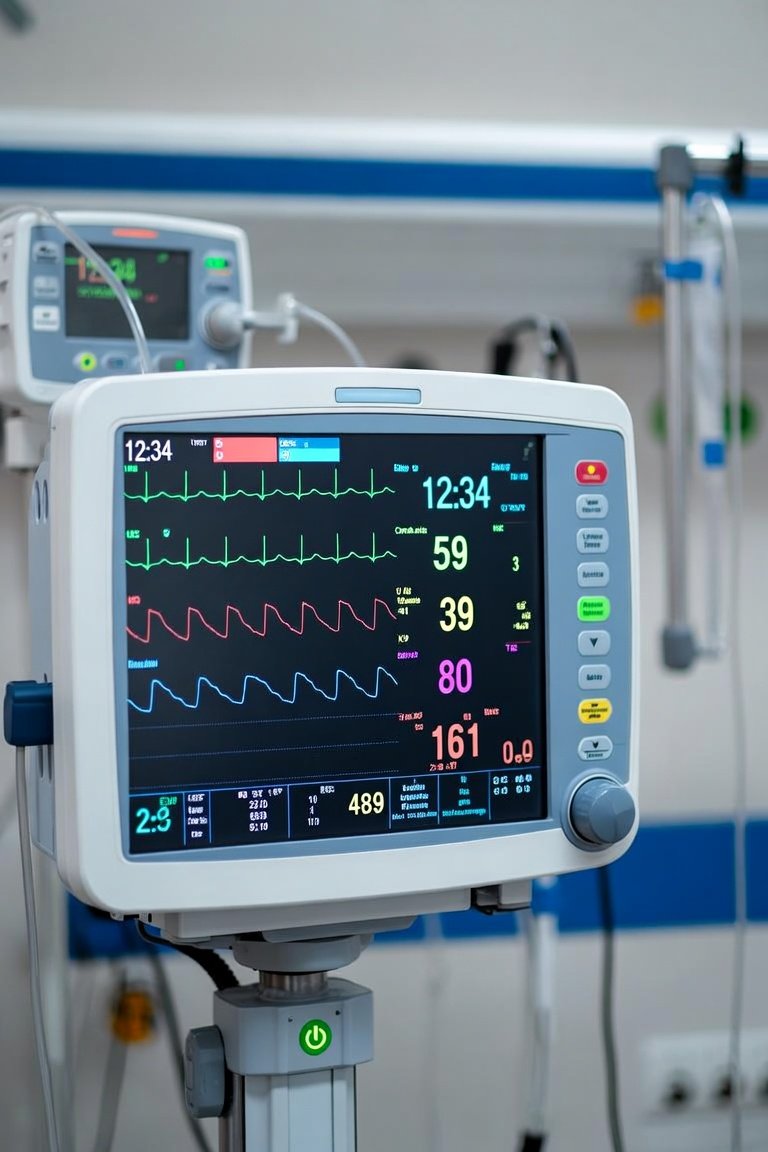
Second, consider the user interface. In a code, nobody has time to scroll through menus. The ideal unit has a dedicated shock button, a large rotary dial for energy selection, and a color display that shows ECG, SpO2, and capnography simultaneously. I strongly recommend devices with a "quick look" function that displays the rhythm on the screen within two seconds of electrode attachment. Also, look for a real-time CPR feedback system. These use an accelerometer in the pads to measure compression depth and rate, giving audible prompts like "push harder" or "good compressions." This feature alone improves survival rates by nearly 30 percent in some studies.
THREE TOP PERFORMERS FOR DIFFERENT CLINICAL SCENARIOS
For a busy emergency department, the ZOLL R Series remains my benchmark. Its proprietary Rectilinear Biphasic Waveform handles high-impedance patients better than most, and the CPR dashboard with real-time waveform analysis is unmatched. The device also integrates with ZOLL’s See-Thru CPR technology, which filters out compression artifact so you can see the underlying rhythm without pausing chest compressions. This is a game changer in prolonged resuscitations.
For prehospital and transport use, the Physio-Control LIFEPAK 15 is the workhorse. It is rugged, has a battery life that exceeds eight hours of continuous monitoring, and its manual override mode gives advanced paramedics full control. The monitor is bright and readable in direct sunlight, and the data management system allows you to transmit 12-lead ECGs directly to the receiving hospital. If you need a device that survives being dropped on asphalt, this is it.
For a general ward or step-down unit, consider the Defibtech Lifeline AED with a manual override option. It is lightweight, has a seven-year warranty on the battery, and its one-button operation makes it foolproof for nurses who do not run codes daily. The manual mode allows synchronized cardioversion, which is essential for unstable tachyarrhythmias. Many hospitals now deploy these as "first responder" units while the full-featured monitor-defibrillators are reserved for the code team.
WHAT TO LOOK FOR IN YOUR NEXT PURCHASE
Do not get seduced by wireless connectivity and cloud data. Focus on the essentials. 1) Battery hot-swap capability, meaning you can change the battery without powering down the device. 2) A pediatric dose attenuator built into the pads or the software, not a separate accessory that gets lost. 3) Data storage capacity of at least four hours of continuous ECG and event logs, because your quality committee will need that for debriefing. 4) Serviceability. Ask your biomedical team about the cost of the annual calibration and how easy it is to replace the paddle handle or the ECG cable. Some brands lock you into expensive service contracts, so negotiate for open access to the service manual.
FINAL RECOMMENDATION
In my experience, the best defibrillator is the one your team will use without hesitation. I always advise a side-by-side trial for two weeks in your actual clinical environment. Put the devices on a crash cart, run a mock code, and let your nurses and doctors vote. The ZOLL R Series wins for high-acuity settings, the LIFEPAK 15 for transport, and the Defibtech for general wards. But whichever you choose, invest in monthly training drills. The machine is only as good as the hands that operate it. Your next purchase should not be about the latest technology, but about the tool that your team will trust when the alarm sounds.
Dispositivos Médicos
SELECTING THE RIGHT DEFIBRILLATOR FOR CLINICAL PRACTICE