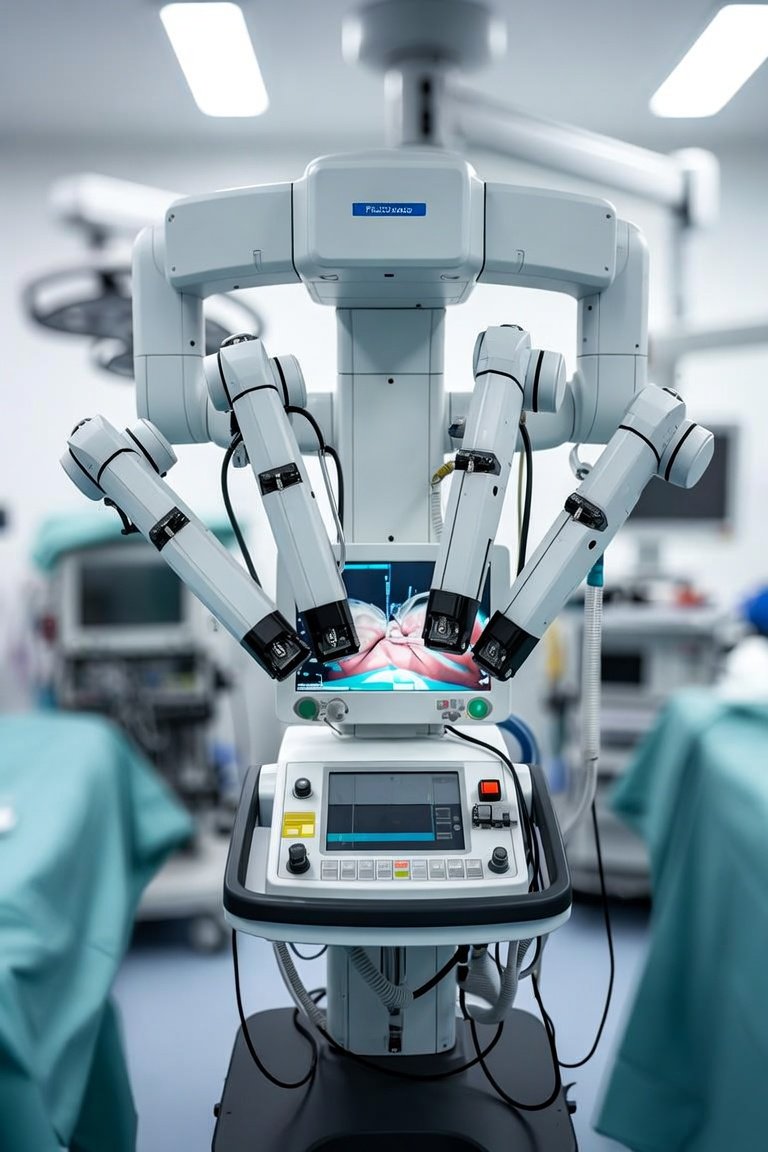
If you have been in the operating room for any length of time, you have seen the shift. The robot arm is no longer a novelty; it is a tool. But the real revolution is not the hardware. It is the software running in the background. AI-assisted surgery is moving from research papers to your OR schedule, and understanding its practical capabilities is essential for any surgeon who wants to stay current.
The core value of AI in surgery is not autonomy. I have yet to see a system that can safely replace a skilled surgeon, and I do not expect to in my career. What AI does well is augment human decision-making and precision in three specific areas. First, real-time anatomical segmentation. Modern AI overlays can highlight critical structures like ureters, vessels, and nerves on the endoscopic video feed, reducing the cognitive load of identifying anatomy in a bloody field. Second, instrument tracking and safety zones. The system can alert you if your tool tip is approaching a no-go zone, such as the common bile duct during a cholecystectomy. Third, workflow prediction. The AI can analyze the current phase of the procedure and suggest the next best step or warn if you are deviating from the standard approach.
When comparing AI platforms, you will encounter two main categories: embedded systems and overlay systems. Embedded AI is built into robotic platforms like the da Vinci with its Firefly fluorescence or the newer Hugo RAS system. These are tightly integrated and require minimal setup. Overlay systems, such as those from companies like Activ Surgical or Proprio, work with standard laparoscopic towers and even open surgery cameras. They are more flexible but require calibration and a dedicated processing unit. For most general surgeons, an overlay system offers a lower barrier to entry. For high-volume robotic surgeons, the embedded option is more seamless.
What should you look for when evaluating an AI-assisted surgery system? Ignore the marketing claims about "autonomous surgery." Focus on three technical specs. The latency of the overlay. If the AI annotation lags more than 200 milliseconds behind the real-time video, it is useless for dissection. The training data set. Ask the vendor what specific anatomy and procedures their model was trained on. A model trained on 10,000 laparoscopic cholecystectomies will perform poorly on a Whipple. The regulatory clearance. Ensure the system has FDA 510(k) clearance for your specific surgical field. Many systems are cleared only for "visualization enhancement," not for diagnostic or therapeutic decision-making.
In my experience, the surgeons who benefit most from AI assistance are those in the middle of their learning curve. A junior attending performing their 50th robotic case sees a measurable reduction in errors with AI guidance. A senior surgeon with 500 cases sees less benefit, but still appreciates the safety net during complex adhesiolysis.
My closing recommendation is simple. Do not buy an AI system because it is flashy. Trial it in your OR for one month. Run it on five routine cases and five complex cases. If the system does not save you time or reduce your mental fatigue, it is not ready for your practice. The technology is advancing, but the best tool is still the one that makes your hands steadier and your decisions clearer. Let the AI be your assistant, not your pilot.
Innovations & Tech
AI-Assisted Surgery: Separating Hype from Clinical Reality