For decades, the only way to get a reliable picture of your heart rhythm, oxygen saturation, or sleep architecture was to visit a hospital and be tethered to a machine the size of a small refrigerator. That era is over. We have entered the age of the clinical-grade home monitor, and it is transforming how we manage chronic conditions and post-operative care. As someone who has spent twenty years installing and maintaining hospital equipment, I can tell you that the gap between what a patient can use at home and what a nurse uses in the ICU has never been narrower.
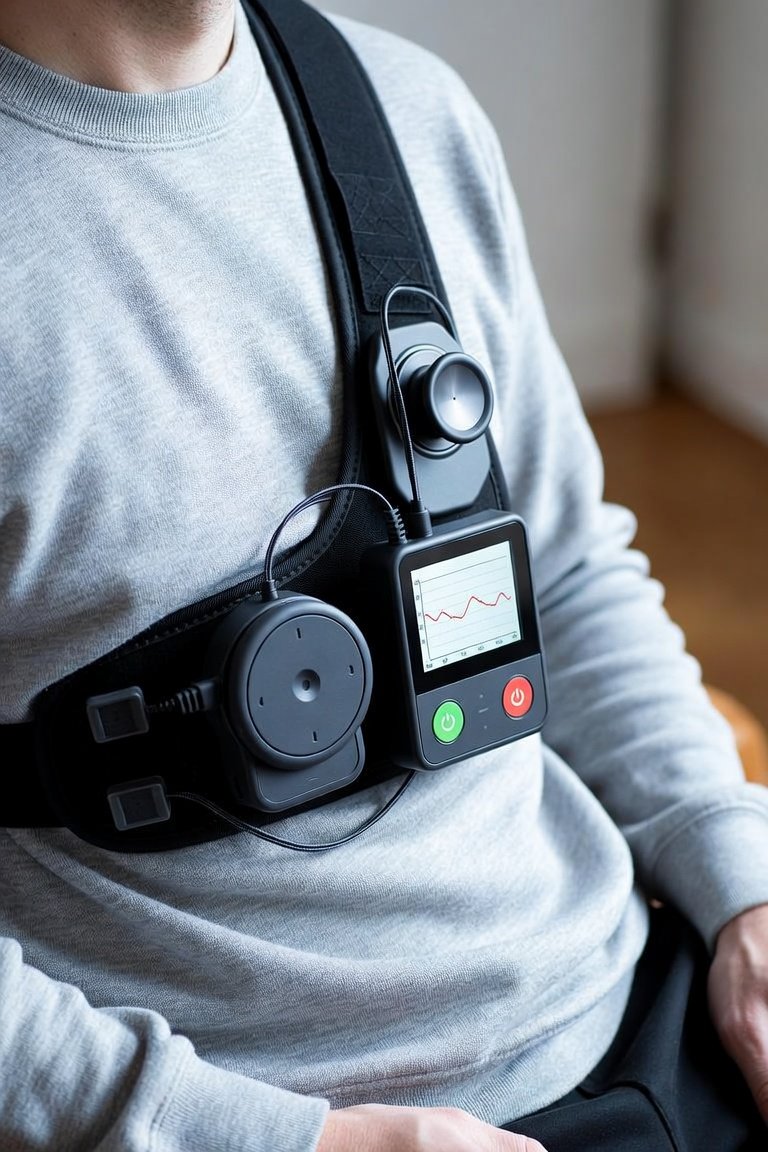
The most significant shift is in sensor accuracy and data fidelity. The new generation of wearable patches and smart rings no longer just counts steps. They use photoplethysmography (PPG) with multiple wavelengths to measure blood oxygen saturation, and single-lead ECG algorithms that are now sophisticated enough to flag atrial fibrillation with a sensitivity that rivals a standard 12-lead resting ECG for intermittent detection. For home monitoring, the key features to look for are continuous data logging, not just spot checks, and automatic arrhythmia detection. A device that only takes a reading when you press a button is useless for catching a paroxysmal event that lasts thirty seconds at 3 AM. Look for devices that store raw waveform data, not just summary trends. This is critical for your physician to review later.
When comparing options, you have to think about the clinical use case. For post-operative monitoring after a joint replacement, a simple arm cuff that syncs via Bluetooth to a smartphone app is often sufficient for tracking blood pressure and heart rate trends. However, for managing congestive heart failure, you need a scale that measures weight AND body impedance to estimate fluid retention, paired with a wearable that tracks heart rate variability. The most underrated device in this category is the disposable, adhesive chest patch that records a single-lead ECG continuously for 14 days. They are more expensive than a smartwatch, but the signal quality is vastly superior because it is placed directly over the heart’s electrical axis, and it eliminates the motion artifact that plagues wrist-based sensors.
What should you look for when selecting a system? I have three hard rules. First, insist on FDA clearance or CE marking for the specific clinical claim you need. Many consumer devices are "wellness" products, not medical devices. The difference is in the validation. Second, verify the data export capability. Your system is only as good as its interoperability. If the device cannot generate a PDF report or integrate with a patient portal, you will spend your time manually transcribing numbers into a spreadsheet, which is a recipe for error. Third, consider battery life and charging ergonomics. A patient with arthritis will not manage a device that requires a magnetic pin charger twice a day. A device with a 7-day battery life and a simple cradle is far more likely to be used consistently.
The real-world benefit is the reduction of the "white coat effect" and the ability to capture data in a natural environment. Blood pressure readings taken at home, under normal stress, are often more predictive of cardiovascular risk than those taken in a clinical setting. We are moving toward a model where the home is the primary data collection point, and the clinic is for intervention. The technology is robust, the data is actionable, and the cost has finally dropped to a point where it is accessible.
My recommendation is to start with one metric that your physician has specifically asked you to track. Do not buy an all-in-one device that does everything poorly. Buy a dedicated, clinically validated sensor for that one metric. Master it, understand its trends, and then expand. The goal is not to collect more data, but to collect the RIGHT data, consistently, for years. That is the true power of this technology.
Innovations & Tech
The Quiet Revolution in Your Living Room