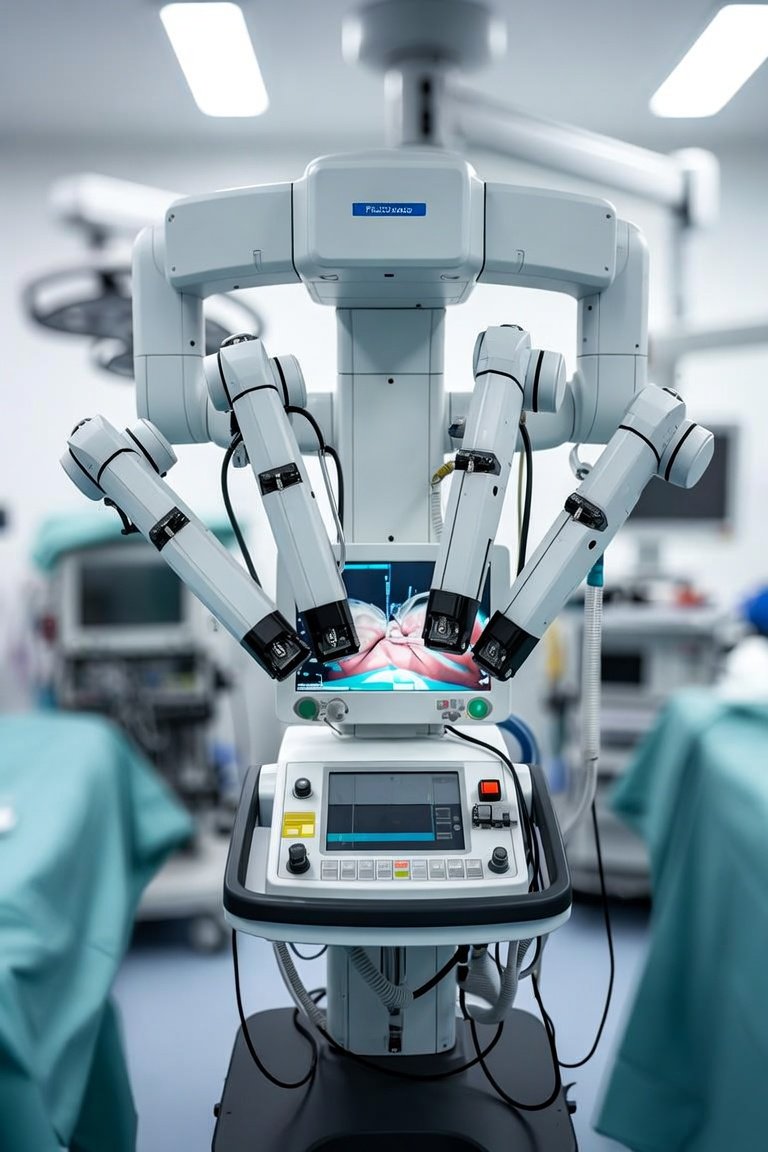
After two decades in medical technology, I have seen hype cycles come and go. But AI-assisted surgery is different. This is not a futuristic concept; it is a present-day tool that is changing how we plan, execute, and follow up on procedures. For doctors, the key is understanding what AI actually does in the OR versus what vendors promise. Let me break down the practical realities.
The core value of AI in surgery lies in three specific areas. First, preoperative planning. AI algorithms can now analyze CT and MRI scans in seconds, segmenting anatomy and highlighting critical structures like vessels or tumor margins. This gives you a 3D roadmap before the first incision. Second, intraoperative guidance. Real-time AI overlays on endoscopic or robotic views can flag unexpected anatomy, track instrument position, and even predict tissue perfusion based on video feed analysis. Third, postoperative assessment. AI can review surgical video to identify moments of high risk, such as excessive retraction or accidental contact, and correlate these with patient outcomes. This is not about replacing your judgment; it is about augmenting your perception.
When comparing systems, you will see two main approaches. The first is AI embedded within robotic surgical platforms, like the da Vinci or newer systems from CMR Surgical and Johnson & Johnson. These use AI for instrument tracking, tremor reduction, and collision avoidance. The second is AI as an overlay on traditional laparoscopy or open surgery, using cameras and software from companies like Activ Surgical or Proprio. The overlay approach is more flexible and less capital-intensive, but it requires a stable video feed and calibration. For most hospitals, the overlay option offers a lower barrier to entry. But if you are already using a robotic system, the integrated AI features are becoming standard and worth exploring.
What should you look for when evaluating an AI-assisted system? Focus on three practical criteria. One: Does the AI actually integrate with your existing workflow? If it requires a separate monitor or a dedicated technician, it will slow you down. Two: Is the AI validated on your specific procedure type? A system trained on colorectal surgery may not perform well in orthopedics. Three: What is the data output? You want actionable alerts, not a firehose of numbers. Good AI gives you a clear, simple warning when something is off, not a dashboard full of metrics.
The bottom line for any surgeon: AI-assisted surgery is not about automation. It is about precision. The best systems today act like a second assistant who never gets tired, never misses a detail, and can recall the last 500 similar cases instantly. But they require your input. You set the goals. You decide the plan. The AI simply helps you execute it more consistently, with fewer surprises.
My recommendation: Start small. Pick one procedure you do frequently. Trial an AI overlay system for three months. Compare your outcomes, operative time, and complication rates against the previous year. The data will speak for itself. And if you are in a hospital considering a capital purchase, demand a live demo with your own cases, not a vendor's curated video. That is the only way to see if the technology truly fits your hands.
Innovations & Tech
AI-Assisted Surgery: Separating Signal from Noise in the Operating Room