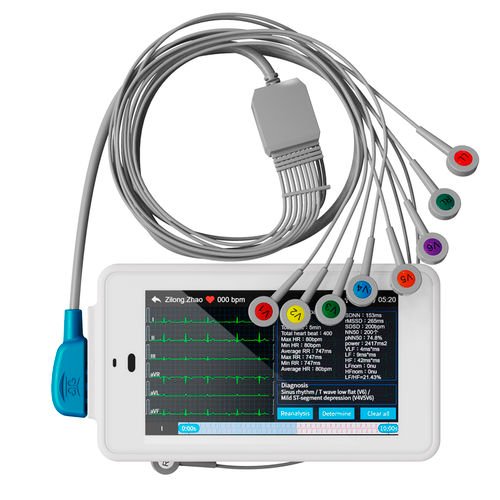
After two decades in medical technology, I have seen diagnostic tools evolve from simple lab analyzers to intelligent systems that can process imaging, lab data, and patient history in seconds. Today, AI-powered diagnostic tools are not a futuristic concept; they are deployed in radiology, pathology, cardiology, and emergency departments. This review focuses on three categories that are making the most impact: AI-assisted imaging platforms, clinical decision support systems, and point-of-care AI devices. My goal is to help you cut through the hype and understand what actually works on the front lines.
The most important feature of any AI diagnostic tool is its ability to integrate seamlessly into existing workflows. The best systems do not replace the clinician but act as a second reader. For example, in radiology, AI algorithms for chest X-rays can flag pulmonary nodules or pneumothorax within seconds. I recommend looking for tools that offer a sensitivity above 95% for critical findings, as this reduces false negatives. Another key benefit is speed. AI can triage studies by priority, so a radiologist sees the most urgent case first. This is especially valuable in busy emergency departments. Finally, look for tools that provide explainability. A black-box algorithm is dangerous. The system should highlight the region of interest and give a confidence score, allowing you to verify the finding.
When comparing options, consider the specific clinical setting. For radiology, the top contenders are Aidoc, Zebra Medical Vision, and GE Healthcare’s Edison platform. Aidoc excels in head CT analysis for intracranial hemorrhage, while Zebra is strong in chest X-ray and bone density assessment. For cardiology, I have seen excellent results with Eko’s AI-enhanced stethoscope, which can detect heart murmurs and atrial fibrillation with an accuracy comparable to a specialist. In pathology, Paige AI offers tools for prostate and breast cancer detection that reduce reading time by up to 30%. Do not overlook the importance of regulatory clearance. Only use tools that have FDA clearance or CE marking for your specific region. Also, evaluate the data privacy protocols. Patient data must remain within your hospital’s secure environment.
What to look for is not just the algorithm but the support ecosystem. A good vendor provides regular updates, training for your staff, and a clear pathway for integration with your existing PACS or EHR. I strongly advise a pilot test in a controlled setting before full deployment. Measure the impact on turnaround time, diagnostic accuracy, and clinician satisfaction. Also, consider the total cost of ownership. Some tools charge per study, while others have a subscription model. For a busy hospital, a per-study fee can become expensive. Negotiate a flat rate if possible.
In closing, AI-powered diagnostic tools are not magic, but they are powerful allies. The key is to choose tools that are validated, transparent, and fit your specific workflow. Start with one area, such as chest X-ray triage, and expand gradually. The technology is here to stay, and when used correctly, it can reduce burnout, catch missed diagnoses, and improve patient outcomes. My advice is to stay informed, test thoroughly, and always keep the clinician in the loop.
Medical Devices
AI-Powered Diagnostic Tools: A Practical Review for Clinical Decision-Making