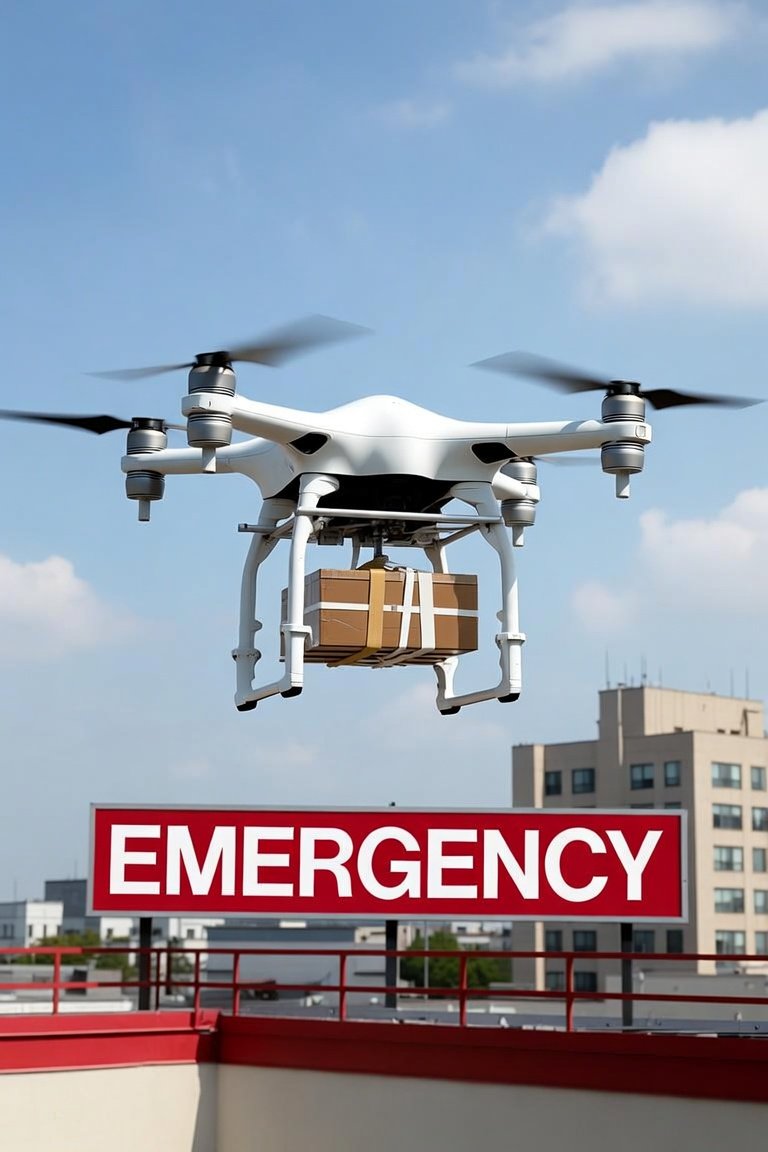
I have spent two decades in medical technology, and I can tell you that the integration of drones into emergency medical services is not a futuristic concept—it is happening now, and it is saving lives. When every second counts, a drone can deliver a defibrillator, a dose of naloxone, or a blood unit to a remote accident scene faster than any ambulance. The technology has matured to the point where it is reliable, cost-effective, and practical for daily use.
Let me walk you through what makes these systems work. The key features are threefold. First, payload capacity. Most medical drones can carry between 2 and 5 kilograms, which is enough for an AED, a trauma kit, or a small cooler with blood products. Second, flight time and range. Typical models offer 30 to 45 minutes of flight time, covering a radius of 10 to 20 miles. This is sufficient for most urban and suburban emergency zones. Third, autonomous navigation with GPS and obstacle avoidance. These drones fly pre-programmed routes, land at designated drop zones, and return to base without a pilot. This eliminates human error and reduces response times by up to 60 percent compared to ground ambulances.
Now, let us compare the main options on the market today. The most common are multi-rotor drones, like the DJI Matrice 300 RTK or the Wingcopter 178. The Matrice is rugged, with IP45 weather resistance, and can operate in moderate rain. It is ideal for urban environments where you need precision landing on a street corner. The Wingcopter, on the other hand, uses a tilt-rotor design that allows for longer range—up to 68 miles—and better wind stability. This makes it suitable for rural or coastal areas. For blood delivery, the Zipline system is the gold standard. It uses fixed-wing drones that launch from a catapult and deliver packages via parachute. Zipline has completed over 500,000 commercial deliveries in Rwanda and Ghana, with a 99.9 percent on-time rate. The trade-off is that fixed-wing drones require a dedicated launch and recovery site, while multi-rotor drones can operate from a parking lot or a hospital rooftop.
What should you look for when evaluating a medical drone system? First, regulatory approval. Ensure the drone is certified by your national aviation authority for beyond visual line of sight (BVLOS) operations. Without this, you are limited to line-of-sight flights, which defeats the purpose. Second, integration with your existing dispatch system. The drone must be able to receive real-time data from your emergency call center, including GPS coordinates and patient condition. Third, payload security. The drone should have a temperature-controlled compartment for biologics, and a tamper-evident seal for medications. Fourth, training and maintenance. The vendor should provide a comprehensive training program for your staff, including simulator sessions and field drills. I recommend a minimum of 40 hours of hands-on training per operator.
In my experience, the most successful implementations start with a pilot program focused on a single use case, such as AED delivery for cardiac arrest. Measure the time savings and survival rates over six months. Then expand to naloxone for opioid overdoses, and finally to blood products for trauma. This phased approach builds confidence and allows you to refine your protocols.
To close, I urge you to consider medical drones not as a replacement for ground ambulances, but as a force multiplier. They extend your reach, reduce your response times, and give your paramedics a critical head start. The technology is proven. The question is no longer if you should adopt it, but how quickly you can integrate it into your emergency response system.
Innovations & Tech
Medical Drones in Emergency Response: A New Standard for Critical Care