For decades, the standard of care for arrhythmia detection meant wearing a clunky Holter monitor for 24 to 48 hours, with a tangle of wires glued to your chest, and hoping that your symptom happened to occur during that narrow window. We all know the frustration. Today, that paradigm has shifted dramatically. Portable, single-lead ECG monitors now fit in a shirt pocket, provide medical-grade data, and allow you to capture a rhythm strip the moment you feel a palpitation, not days later. Having evaluated these devices for clinical and home use for years, I can tell you that the current generation is not a gimmick. They are legitimate screening tools, but they are not all created equal. Here is a practical breakdown of what you should actually consider.
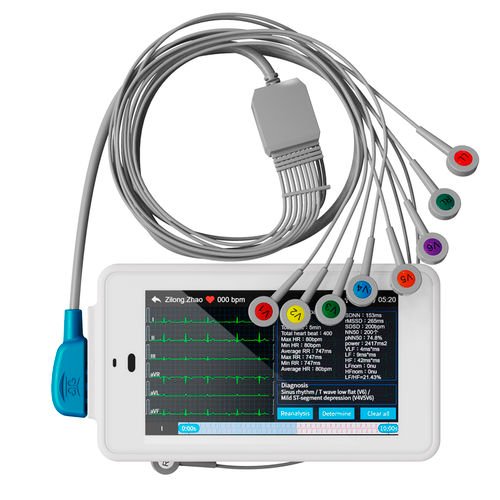
The first major distinction lies in the recording methodology. You have two dominant form factors: the fingertip or wrist devices, and the chest-strap or patch devices. Fingertip and wrist monitors, like the widely used KardiaMobile or the Samsung Galaxy Watch series with ECG capability, are event-triggered. You place your fingers on the electrodes or touch the watch crown for thirty seconds when you feel something. This is excellent for capturing transient palpitations or skipped beats. The chest-strap devices, such as the Zio XT or the newer QardioCore, are continuous recorders. They track every heartbeat for days or weeks. If you have unexplained fainting or very sporadic symptoms, a continuous recorder is non-negotiable. A thirty-second snapshot will miss a brief run of atrial fibrillation that occurs at 3 AM. For that reason, I always advise patients with syncope or near-syncope to look for a continuous monitoring solution, not a spot-check device.
Now, let us talk about the practical comparison of the leading consumer-grade devices. The AliveCor KardiaMobile 6L is my top recommendation for most adults. It captures six leads instead of the standard one, giving your physician a much richer picture of the heart's electrical axis. It is FDA-cleared for detecting Atrial Fibrillation, Bradycardia, and Tachycardia. The real-world benefit is that it is tiny, fits on a keychain, and the app is remarkably intuitive. The downside is that it requires you to be still and place both thumbs on the pads, which can be challenging during a panic attack or severe palpitations. On the wrist side, the Apple Watch Series 9 and the Fitbit Sense 2 offer passive AFib detection. They run a background algorithm that checks for irregular rhythms periodically. However, they do not provide a full diagnostic strip for every single beat. They are better for long-term trend analysis than for acute, on-demand diagnosis. For the athlete or the patient who wants continuous data without a chest strap, the Polar H10 chest strap paired with a third-party app like Heartbeats is the gold standard for accuracy, though it is less user-friendly for the non-technical user.
When you are comparing these devices, look beyond the price tag and focus on three critical specifications. First, the sampling rate and filter. A device that samples at 300 Hz or higher will produce a cleaner signal, reducing muscle artifact that often mimics arrhythmias. Second, check the storage capacity. Some devices only store a few recordings on the device itself, relying on a phone connection. If you are in a dead zone, you lose the data. Third, and most importantly, verify the clinical validation. Does the manufacturer have published studies in peer-reviewed journals? A device that is merely "FDA-registered" is not the same as one that is "FDA-cleared" for arrhythmia detection. That clearance means the algorithm has been tested against a 12-lead ECG in a clinical setting.
Your final choice should hinge on your specific symptom profile. If you have occasional, short-lived palpitations that you can sit down and capture, the KardiaMobile 6L is unmatched. If you have silent AFib or are post-ablation and need to track burden over a month, a patch or a continuous wearable is better. Do not buy a device just because it is popular. Buy the one that answers the question your cardiologist is asking. And remember, no portable device replaces a full 12-lead ECG. They are screening tools, not definitive diagnostic instruments. Use them to gather data, share the PDF reports with your physician, and let the professional interpret the rhythm. The technology is here to empower you, but it works best when paired with a human expert.
Medical Devices
The Quiet Evolution of At-Home Heart Monitoring