For decades, the operating room has been a theater of human precision, but human hands have limits—tremors, fatigue, and the inherent constraints of wrist articulation. Over the last twenty years, I have watched surgical robotics evolve from a niche novelty into a cornerstone of modern minimally invasive surgery. We are no longer asking if robots belong in the OR; we are asking which platform, which configuration, and which workflow will define the next decade. The future is not a single machine but an ecosystem of intelligent, haptic-driven, and data-connected systems that extend the surgeon’s capabilities far beyond what biology allows.
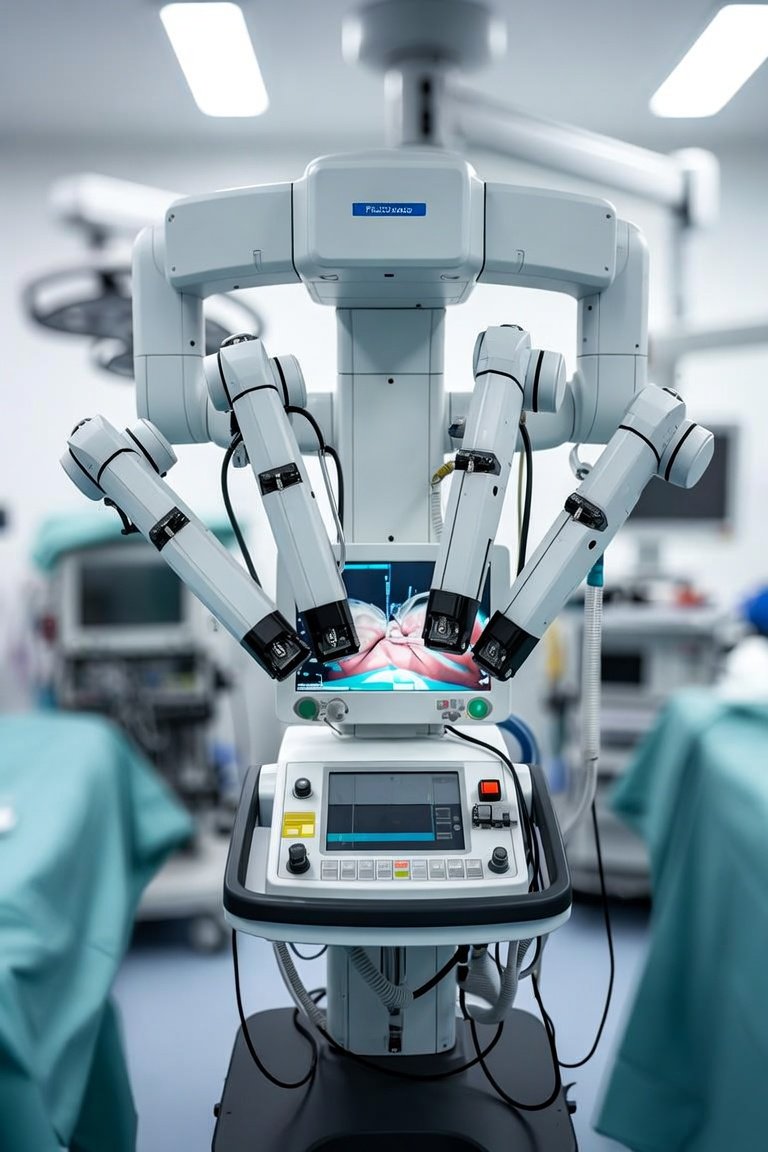
The core value proposition of robotic assistance is not automation—it is augmentation. The most significant features to understand are the articulated instruments with seven degrees of freedom, which mimic the natural movement of the human wrist but with a greater range of motion inside the body. Combined with tremor filtration, which eliminates the natural 6-8 Hz micro-tremor in every human hand, and motion scaling, where a 5 mm hand movement becomes a 1 mm instrument movement, these systems deliver a level of precision that is simply unattainable in traditional laparoscopy. For the specialist, the practical benefit is threefold: 1) Reduced blood loss due to finer dissection of vascular planes. 2) Faster postoperative recovery because smaller incisions mean less trauma to the abdominal wall. 3) A significantly lower conversion rate to open surgery, which directly impacts hospital length of stay and readmission rates.
When comparing systems, the market is no longer a one-horse race. The Intuitive Da Vinci Xi remains the workhorse, and for good reason: its ecosystem is mature, its instrument reliability is proven, and its 3D high-definition vision is exceptional. However, new entrants are forcing a serious conversation. The CMR Versius offers a modular, open-console design that appeals to surgeons who prefer not to be tethered to a fixed tower, and its smaller footprint is a blessing for cramped ORs. The Asensus Senhance introduces haptic feedback—a feature that allows the surgeon to feel tissue tension, which the Da Vinci lacks entirely. And the Medtronic Hugo system is aggressively targeting the cost-sensitive segment with a flexible, modular arm setup. My advice is to look beyond the console. Compare instrument lifecycle costs, the availability of training simulators, and the service response time in your region. A robot that is down for two days is a financial liability, not an asset.
What should a hospital administrator or lead surgeon look for when evaluating a robotic program? First, do not buy a robot to impress patients; buy it to solve a clinical problem. If your team performs high volumes of colorectal, urologic, or gynecologic procedures, the investment is justified. Second, consider the data integration. Modern systems now offer real-time analytics on surgical efficiency, instrument usage, and even intraoperative video annotation for training. This is a game-changer for credentialing new surgeons. Third, look at the upgrade path. The technology is moving toward single-port access and even transoral robotics. Ensure the platform you choose has a roadmap, not just a current model.
The operating room of the future will be a hybrid environment where the surgeon sits at a console, but also has access to augmented reality overlays that project critical anatomy like vessels and ureters directly onto the surgical field. We are moving toward autonomous assistance, where the robot can hold retraction, follow a suture line, or even perform a routine task like suctioning, freeing the surgeon’s focus for the complex decision-making.
My closing recommendation is pragmatic: do not wait for the perfect system, because it will not arrive. Instead, start with a robust training program, invest in a dual-console system for mentorship, and choose a partner, not just a vendor. The robot is a tool, but it is the most sophisticated tool we have ever placed in a surgeon’s hands. The future is not coming; it is already in the OR, and it is time to get on the table.
Innovations & Tech
THE QUIET REVOLUTION: HOW SURGICAL ROBOTS ARE REDEFINING THE OPERATING ROOM