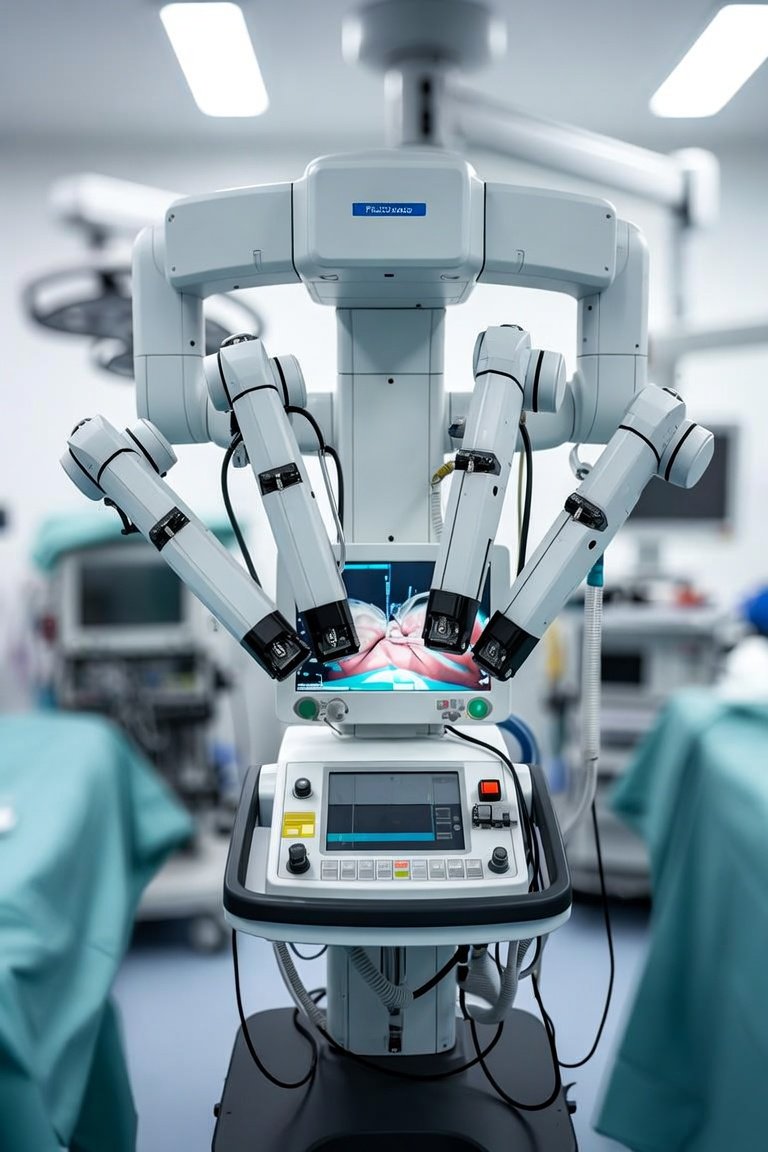
If you have been in the operating room for the last decade, you have seen the evolution from open procedures to minimally invasive techniques. Now, we are entering the third major shift: intelligent assistance. AI-assisted surgery is no longer a concept from a conference keynote. It is here, in the da Vinci systems, in navigation platforms, and in imaging software. As a medical equipment specialist, I want to cut through the hype and give you the practical details you need to evaluate this technology for your own practice.
The core value of AI in surgery is not about replacing the surgeon. It is about augmenting human capability in three specific areas: perception, precision, and decision support. First, perception. Modern AI algorithms can analyze pre-operative CT or MRI scans and overlay critical anatomy in real time during a procedure. For example, in colorectal surgery, the system can highlight the ureter or major vessels, reducing the risk of inadvertent injury. Second, precision. Robotic systems with AI-driven tremor filtration and motion scaling allow for micro-movements that are impossible with the human hand alone. Third, decision support. Some platforms now analyze the live video feed to identify tissue planes, measure perfusion using indocyanine green (ICG), and even predict the likelihood of a positive margin during tumor resection.
When comparing available systems, you have three primary categories to consider. The first is the established robotic platforms, such as the da Vinci SP or the newer Ion system. These are closed-loop systems where the AI is integrated into the console and the instruments. They offer the highest level of haptic feedback and motion control but come with significant capital cost and a steep learning curve. The second category is augmented reality navigation systems, like those from Stryker or Brainlab. These are often used in orthopedics and neurosurgery. They overlay 3D models onto the surgical field, but the AI is more focused on registration and tracking than on real-time decision making. The third and fastest-growing category is software-only solutions. Companies like Proximie or Touch Surgery offer AI that runs on existing laparoscopic towers or mobile devices. These are less expensive and can be adopted more quickly, but they lack the physical robotic arms. Your choice depends on your surgical volume, case mix, and hospital budget. For high-volume, complex procedures like prostatectomies or lung resections, a dedicated robotic system is likely justified. For general surgery or diagnostic procedures, a software overlay may be sufficient.
What should you look for when evaluating an AI-assisted system? Focus on three things: data transparency, workflow integration, and regulatory clearance. First, ask the vendor exactly what data the AI was trained on. Was it from your specific patient population? Was it validated in peer-reviewed studies? Second, consider how the system fits into your current OR workflow. Does it require a dedicated technician? Does it add five minutes to setup time? Third, verify the FDA clearance level. Most surgical AI tools are cleared as Class II devices, meaning they assist but do not replace clinical judgment. Be wary of any system that claims to make autonomous decisions.
My closing recommendation is this: start small. Do not try to implement a full robotic program overnight. Instead, pilot a software-based AI overlay for a specific procedure you perform frequently, such as a laparoscopic cholecystectomy. Use it for ten cases. Measure your own time, your complication rate, and your subjective comfort level. You will quickly see whether the technology adds value or simply adds noise. AI-assisted surgery is a powerful tool, but it is still a tool. The best outcomes come from the surgeon who understands its strengths and its limits.
Innovations & Tech
The Surgeon's New Partner: Understanding AI-Assisted Surgery