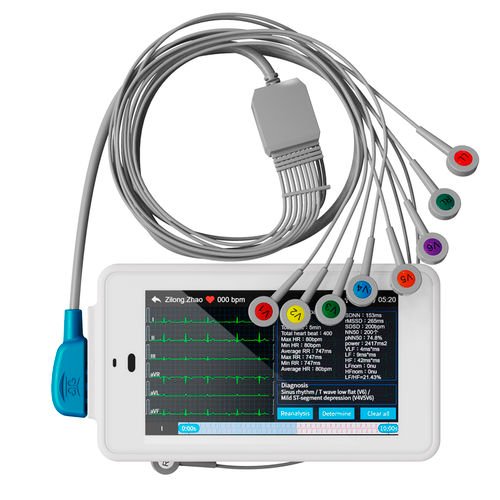
Over the past two decades, I have watched patient monitoring evolve from clunky wired carts to sleek, wireless systems that free patients from their beds. Wireless vital sign monitors have become a staple in hospitals, clinics, and even home care settings. But as with any technology, they come with distinct trade-offs that every clinical team should understand before making a purchase or deployment decision. Let me walk you through the practical pros and cons based on real-world use.
The primary advantage of wireless monitors is patient mobility. Traditional wired systems tether a patient to a bedside monitor, limiting movement and increasing the risk of falls from tangled cables. Wireless devices, such as chest-worn patches or wrist-mounted sensors, allow patients to walk, use the bathroom, or even sleep without being disconnected. This improves patient comfort and can reduce hospital-acquired conditions like pressure ulcers. From a workflow perspective, nurses no longer spend time untangling wires or reconnecting leads after a transfer. Data flows automatically to a central station or electronic health record, cutting down on manual charting errors. I have seen units reduce alarm fatigue by using wireless systems that filter motion artifacts better than older wired models.
However, there are significant drawbacks. Signal interference is a recurring issue in busy hospitals. Walls, metal equipment, and even other wireless devices can disrupt transmission, leading to gaps in monitoring. I have worked in facilities where patients in MRI suites or near elevators lost connectivity, requiring staff to revert to manual checks. Battery life is another practical concern. Most wireless monitors need recharging every 8 to 24 hours, depending on the device and frequency of data transmission. If a patient is in a high-acuity setting, a dead battery mid-shift can be dangerous. Additionally, the cost of these systems is higher upfront compared to traditional wired monitors, and replacement sensors or patches add ongoing expenses.
When comparing options, consider the type of monitoring you need. For general ward patients who require periodic spot checks, a wireless arm cuff with Bluetooth connectivity to a tablet works well. For continuous monitoring of heart rate, respiratory rate, and oxygen saturation, a chest-strap or patch sensor is more reliable. Some systems integrate multiple parameters into a single device, while others require separate sensors for each vital sign. I recommend trialing equipment from at least two vendors before committing. Pay attention to the user interface for both clinicians and patients. If a device requires frequent recalibration or has a confusing app, staff adoption will suffer.
What should you look for in a wireless vital sign monitor? First, ensure the device uses a secure, HIPAA-compliant transmission protocol. Second, check the battery life under typical use conditions, not just in a lab. Third, evaluate the alarm system. The best monitors allow you to customize thresholds and prioritize alerts to reduce nuisance alarms. Fourth, confirm compatibility with your existing electronic medical record system. Many vendors offer middleware that bridges the gap, but integration can be costly if not planned upfront. Finally, consider the physical design. A monitor that is too bulky or has adhesive that irritates skin will be rejected by patients.
In closing, wireless vital sign monitors are not a replacement for all wired systems, but they are a powerful tool for specific clinical scenarios. For step-down units, telemetry floors, and ambulatory care, they offer clear benefits in patient mobility and workflow efficiency. For intensive care or high-acuity areas, wired monitors still provide superior reliability and continuous data. My advice is to start small. Pilot a wireless system in one unit, gather feedback from nurses and patients, and then scale based on what you learn. The technology is advancing rapidly, but thoughtful implementation remains the key to success.
Medical Devices
Wireless Vital Sign Monitors: A Balanced Look at the Technology