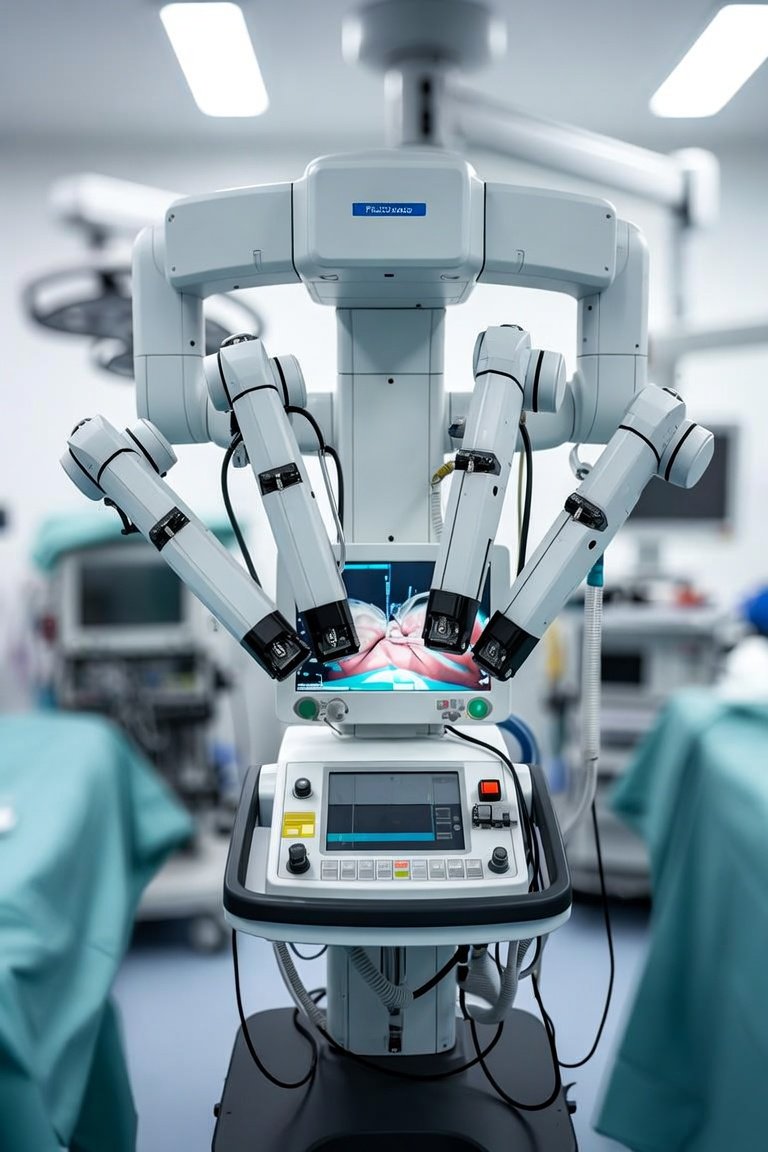
I have spent two decades in the operating room, and I can tell you that the most significant shift I have witnessed is not a new robot or a faster imaging system. It is the quiet integration of artificial intelligence into the surgical workflow. Many doctors still view AI as a futuristic black box, but the technology is already here, embedded in systems you may be using today. The key is understanding what it can and cannot do for your patients.
Let me break down the practical features that matter. First, AI in surgery excels at pattern recognition during intraoperative imaging. For example, modern fluorescence-guided systems now use deep learning to differentiate between healthy tissue and malignant margins in real time, with accuracy rates approaching 95 percent in some colorectal studies. Second, AI-driven navigation platforms can fuse preoperative CT or MRI data with live endoscopic video, overlaying critical structures like vessels or ureters directly onto your field of view. Third, predictive analytics are becoming standard in robotic systems. These algorithms track instrument movement and tissue interaction, alerting you to excessive force or unintended trajectory before injury occurs. Fourth, AI is transforming surgical planning. Systems like those from Brainlab and Stryker now simulate multiple approach angles and predict postoperative outcomes based on your patient's unique anatomy.
When comparing current options, the landscape is divided into three tiers. Tier one includes dedicated surgical robots with integrated AI, such as the da Vinci Xi with its Firefly fluorescence and EndoWrist motion analysis. These are ideal for complex pelvic and thoracic cases but carry a high capital cost. Tier two consists of AI-enhanced navigation systems that can be added to existing laparoscopic towers. Think of platforms like Medtronic's StealthStation or Smith+Nephew's NAVIO. These offer a lower entry cost and are particularly useful for orthopedics and spine surgery. Tier three is the emerging category of standalone AI software that runs on standard hardware. These applications, such as those from Proximie or Touch Surgery, provide real-time guidance and peer-to-peer collaboration without requiring new equipment. For a general surgeon, I recommend starting with tier two or three to build familiarity before committing to a full robotic system.
What should you look for when evaluating these technologies? First, demand clinical evidence specific to your specialty. A system validated for urology may not perform well in bariatric surgery. Second, check the AI's training data. If the algorithm was trained on a population different from yours, its predictions may be less accurate. Third, ensure the system has a clear override mechanism. You must always be able to disengage AI assistance instantly. Fourth, evaluate the learning curve. Some systems require 20 to 30 cases before the surgeon feels comfortable, while others integrate in fewer than five.
My closing advice is this: AI-assisted surgery is not a replacement for your judgment. It is a tool that reduces cognitive load, improves precision, and catches errors early. Start small. Use AI for preoperative planning or intraoperative navigation in straightforward cases. Track your outcomes. Once you see the data, you will understand why this technology is becoming standard of care. The future of surgery is not autonomous robots. It is you, augmented by intelligence that never gets tired, never blinks, and never forgets a case.
Innovations & Tech
AI-Assisted Surgery: Separating Hype From Clinical Reality