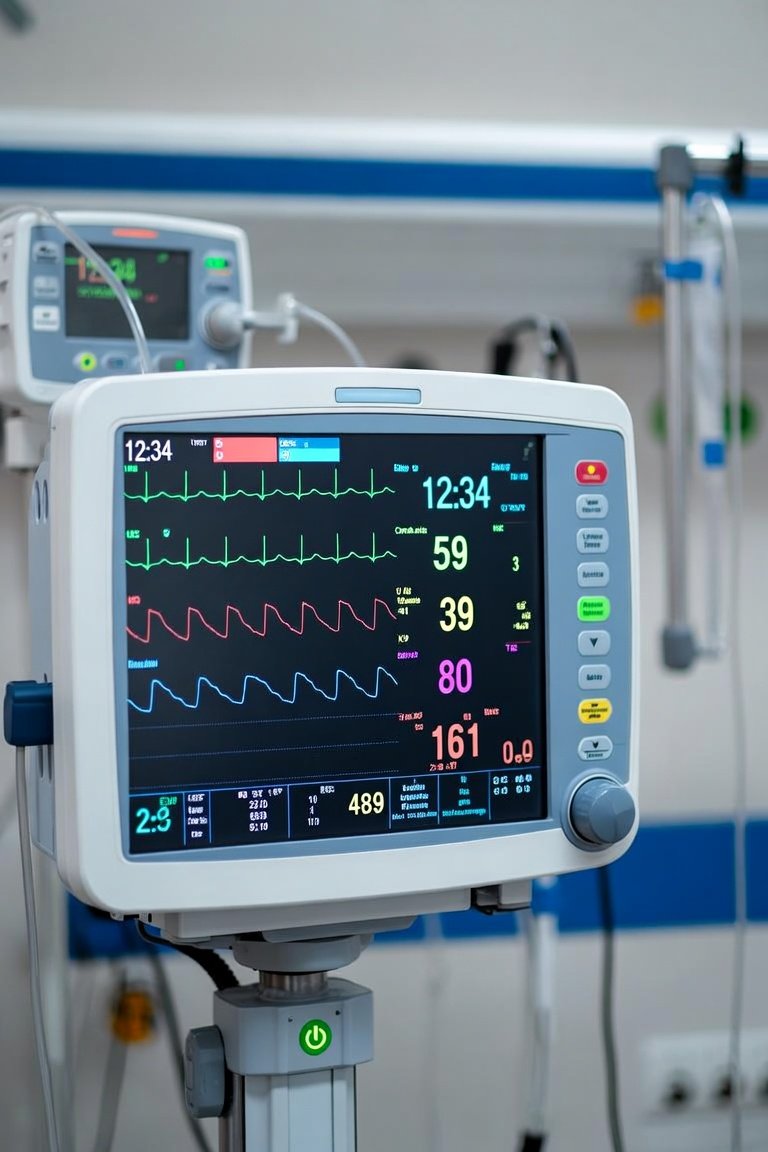
When a patient’s heart slips into ventricular fibrillation or pulseless ventricular tachycardia, the defibrillator you grab off the cart must deliver. Over two decades in clinical engineering, I’ve seen machines fail under pressure—not because they’re bad, but because they’re mismatched to the environment. The best defibrillators for clinical use balance three things: shock reliability, ease of operation, and data integration. Let me walk you through what actually matters on the floor.
The first consideration is waveform technology. Biphasic truncated exponential (BTE) or rectilinear biphasic waveforms now dominate because they adjust energy delivery based on patient impedance. This means you get effective defibrillation at lower joules—typically 120 to 200 J—reducing myocardial damage. The ZOLL R Series uses a proprietary rectilinear biphasic waveform that compensates for high impedance, which I’ve found useful in obese patients. Physio-Control’s LIFEPAK 15 uses BTE and is a workhorse in EMS. Both are proven, but if your facility sees a diverse body habitus, test both waveforms on your simulation manikins.
Second, think about user interface under stress. In a code, no one reads a manual. The Physio-Control LIFEPAK 20e has a large, backlit screen with intuitive soft keys. ZOLL’s R Series offers a color display and a “See-Thru CPR” filter that lets you see the underlying rhythm without pausing chest compressions. This is a game-changer—it reduces hands-off time, which directly improves survival. For pediatric use, the LIFEPAK 15 has a dedicated pediatric mode that automatically lowers energy settings. I recommend running a mock code with each device to see which your team reaches for without hesitation.
Third, data management matters more than most realize. Modern defibrillators must integrate with your hospital’s electronic medical record (EMR). The Philips HeartStart Intrepid, for example, automatically uploads event data via Wi-Fi or cellular. This saves nursing hours and reduces documentation errors. The ZOLL R Series offers CodeNet, which captures waveforms, capnography, and CPR metrics. If your facility is moving toward paperless resuscitation records, prioritize devices with HL7 or FHIR compatibility.
Now let’s compare three top-tier options for different clinical settings. For the emergency department, I consistently recommend the Physio-Control LIFEPAK 15. It’s rugged, has a 12-lead ECG with interpretive algorithm, and supports manual or AED mode. For the ICU, the ZOLL R Series excels with its integrated pacing, capnography, and non-invasive blood pressure monitoring. For general wards or clinics, the Philips HeartStart Intrepid is compact, battery-efficient, and has a simple three-button operation that even float staff can master. Avoid the temptation to buy one model for the entire hospital—match the device to the acuity.
What should you look for when evaluating defibrillators? Start with battery life. A lithium-ion battery should hold charge for at least 4 hours of monitoring or 200 shocks. Check the manufacturer’s recommended replacement cycle—most are 5 to 7 years. Next, assess pad compatibility. Self-adhesive pads are standard, but some devices require proprietary connectors. I’ve seen facilities stuck with expensive consumables because they didn’t verify cross-compatibility. Finally, test the device’s CPR feedback. The best units, like the ZOLL R Series, provide real-time depth and rate guidance via accelerometer. This improves compression quality and is now part of AHA guidelines.
In closing, the best defibrillator for your clinical use is the one your team trains on consistently. I’ve seen a LIFEPAK 15 save a life in a rural clinic and a ZOLL R Series perform flawlessly in a trauma bay. Schedule a demo with your biomedical team. Run a mock code. Check the data export. And remember: the machine is only as good as the hands that use it. Choose wisely, train relentlessly, and never compromise on shock delivery.
Medical Devices
Best Defibrillators for Clinical Use: A Practical Guide for Healthcare Teams