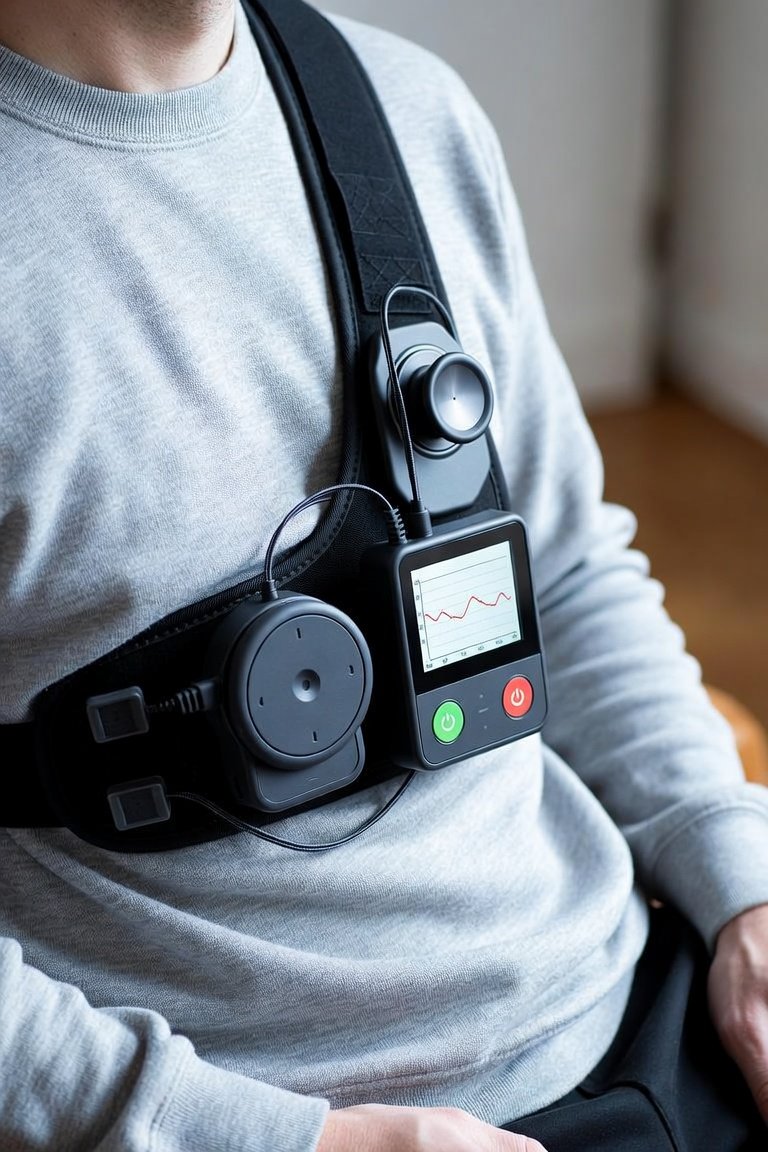
For decades, the idea of monitoring a patient’s vitals outside a clinical setting meant a nurse with a bulky bag and a clipboard. That era is over. The current generation of wearable health technology has turned the average living room into a triage unit, and the data streaming from a patient’s wrist or chest is often more comprehensive than what we captured in a hospital bed ten years ago. As someone who has spent twenty years in medical equipment, I can tell you that the shift from reactive care to proactive, continuous surveillance is not a trend—it is the new standard.
The most significant leap in this field is the transition from single-parameter trackers to multi-modal clinical-grade sensors. We are no longer just counting steps. Today’s devices, such as the Withings ScanWatch and the Apple Watch Ultra 2, integrate photoplethysmography (PPG) for heart rate, SpO2 sensors for blood oxygen, and single-lead ECG capabilities that can flag atrial fibrillation. For the home user, this means a device that can do a 30-second ECG strip and email it directly to a cardiologist. But the real game-changer is the newer class of "medical-grade" patches, like the BioIntelliSense BioSticker or the VitalConnect VitalPatch. These are FDA-cleared for continuous monitoring of heart rate, respiratory rate, skin temperature, and posture for up to 14 days. They are sticky, waterproof, and transmit data to a cloud portal that a care team can review in real-time. That is not a fitness gadget; that is a hospital admission in a bandage.
When choosing between these systems, the practical difference comes down to data fidelity versus user compliance. A smartwatch is excellent for spot checks and trend analysis, but it suffers from "wearer fatigue" and motion artifacts. A chest strap, like the Polar H10, offers clinical-grade ECG accuracy but is uncomfortable for 24/7 use. The patch form factor solves the compliance issue but is often prescription-only and more expensive. For the average patient managing hypertension or early-stage heart failure, I recommend a hybrid approach: use a smartwatch for daily activity and resting heart rate, but pair it with a dedicated, validated blood pressure cuff like the Omron Evolv for accurate readings. Do not rely on the watch’s cuffless BP estimates; they are still too variable for medication adjustments.
The critical question is not just what to buy, but what to look for in the data. First, check for FDA clearance or CE marking—this ensures the algorithm has been validated against clinical standards. Second, look for devices with "trending" capabilities, not just real-time numbers. The power of home monitoring lies in detecting a slow drift, such as a 2% drop in SpO2 over three nights, which is far more telling than a single low reading. Third, prioritize interoperability. If the device cannot export data via HL7 or FHIR to a physician’s EHR, you are creating a data silo. You want a device that generates a PDF report your doctor can actually read. Finally, consider battery life and data storage. A device that needs charging every 12 hours will fail at 3 AM when you need it most.
The ultimate value here is peace of mind, but only if the technology is invisible. The best wearable is the one the patient forgets they are wearing. In my practice, I tell patients to stop looking at the numbers every hour and instead look at the weekly summary. That is where the clinical signal lives. The future is not just about having a device; it is about having a system that knows when to say nothing and when to call for help. If you are considering a wearable for a loved one, start with one parameter—oxygen saturation or heart rhythm—and master that before expanding. The technology is ready. The question is whether we are ready to trust it. I believe we are.
Innovations & Tech
The New House Call: How Wearable Health Tech Is Reshaping Home Monitoring